
The Essential Duties of a Bedside Nurse: Providing Excellent Patient Care
Bedside nurses are essentially the healthcare superheroes for patients. They operate at ground zero during patient care; administering medications, monitoring vital signs and aiding with personal cleanliness. But just as Superman isn’t just about muscles, bedside nursing isn’t only about routine tasks. Ensuring the comfort of patients can be as demanding as detecting subtle changes in their health status, exemplifying their role as patient advocates. Now, let’s dive into specifics on what defines bedside nursing.
A bedside nurse is responsible for providing direct patient care, including administering medications, monitoring vital signs, and attending to the physical and emotional needs of patients. They also play a crucial role in coordinating care between healthcare professionals and advocating for their patients’ well-being.

Defining Bedside Nursing
At its core, bedside nursing is about being there for your patients in every way possible. It means not only taking care of their medical needs but also providing emotional support, advocating for their rights, and being their voice when they can’t speak for themselves.
When you think of the term “bedside nurse,” you might visualize a nurse caring for a patient at their bedside, which is indeed a part of it. But bedside nursing goes beyond the physical space; it encompasses various aspects of patient care. It involves coordinating between healthcare professionals, educating patients about their medical conditions and treatments, and ensuring patients understand their care options. Whether it’s checking vital signs, administering medications, or holding a patient’s hand during a difficult moment, bedside nurses are on the front lines, providing holistic care.
Patient-Centered Care
The cornerstone of bedside nursing is patient-centered care. This means tailoring care to meet each patient’s unique needs and preferences. It involves actively listening to patients, understanding their concerns, and involving them in decision-making about their care. By recognizing the individuality of each patient and respecting their autonomy, bedside nurses create an environment where patients feel valued and understood. Additionally, bedside nurses play a crucial role in promoting health literacy by explaining medical terminology in understandable language and ensuring that patients are well-informed about their conditions and treatment plans.
For instance, imagine a scenario where a patient is confused about their prescribed medications. A skilled bedside nurse would take the time to sit down with the patient, explain each medication’s purpose and potential side effects in plain language, address any concerns, and ensure the patient feels confident about managing their medication regimen at home.
Coordination and Advocacy Another fundamental aspect of bedside nursing is serving as a liaison between patients and other healthcare professionals. This involves conveying patient updates, concerns, and needs to physicians, specialists, and other members of the healthcare team. By effectively communicating with all parties involved in a patient’s care, bedside nurses contribute to comprehensive and cohesive treatment plans. Furthermore, bedside nurses serve as advocates for their patients’ well-being. They ensure that the patients’ perspectives are heard, especially in decision-making processes that affect their care. This advocacy extends to safeguarding patients’ rights and dignity throughout their hospital stay or outpatient experience.
Bedside nursing isn’t just about following protocols; it’s about understanding each patient’s unique needs and providing individualized care that goes beyond medical treatment.
In summary, bedside nursing entails much more than tasks such as administering medications or assisting with personal hygiene—it embodies compassion, advocacy, education, coordination, and personalized care. It’s about establishing trust with patients and creating an environment where they feel supported physically as well as emotionally.
Now that we’ve explored the multifaceted role of a bedside nurse from a foundational perspective let’s transition into more detailed aspects of this vital profession.
Essential Duties in Patient Care
Undoubtedly, one of the key responsibilities of a bedside nurse is ensuring patients receive their medications properly. Administering medications can be a complex process requiring careful attention to detail and adherence to strict protocols. It goes beyond simply handing out pills; nurses must accurately administer the right medication, at the right time, in the correct dosage, and by the correct route. One small mistake could have detrimental effects, emphasizing the critical nature of this duty.
Monitoring vital signs holds immense significance in bedside nursing. It’s not just about taking readings and noting them down — it’s about interpreting these readings and what they mean for the patient. Regularly tracking vital signs such as blood pressure, heart rate, and temperature provides crucial insights into a patient’s health status and helps identify potential abnormalities or changes that may require immediate attention. This vigilance nurtures an environment where potential complications are caught early on, promoting better patient outcomes.
In addition to medical care, assisting patients with their daily activities is an integral part of a bedside nurse’s duties. These activities encompass personal care tasks like bathing, eating, and mobility which directly impact a patient’s comfort and well-being. Providing such support requires both physical and emotional effort from the nurse and plays a pivotal role in maintaining a positive patient experience.
Picture this: A nurse notices elevated blood pressure during routine vital sign checks for a patient who recently had surgery. Recognizing this as a potential sign of complications, she promptly notifies the doctor who takes immediate action to prevent further issues. In another instance, a nurse ensures that an elderly patient safely navigates through the process of getting dressed and moving around despite experiencing discomfort, highlighting how essential daily activity assistance is in ensuring holistic patient care.
These duties are more than just tasks on a checklist; they form the backbone of compassionate and comprehensive care that contributes significantly to a patient’s well-being during their stay.
Moving forward, let’s examine the technical aspects that underline the seamless delivery of care in bedside nursing.
Technical Aspects of Bedside Nursing
As a bedside nurse, you are accountable for proficiently operating and understanding various technical medical equipment. From IV pumps that deliver medication to cardiac monitors that track the heart’s activity, possessing comprehensive knowledge and adeptness in handling these machines is crucial. It’s akin to learning how to use and maintain a new phone or computer. These devices play a vital role in patient care and require constant attention to ensure they are functioning properly.
Furthermore, bedside nurses are responsible for managing medical records and charting. Accurate documentation is essential for maintaining up-to-date patient information and ensuring that the healthcare team has access to all necessary details regarding a patient’s care plan. A meticulous approach is required when documenting patient information to avoid errors that could impact the quality of care provided.
For example, imagine having an IV put in – you trust the nurse with ensuring that the pump delivers the right amount of medication, without which your treatment might not be as effective. This level of trust highlights the importance of a nurse’s proficiency in handling technical medical equipment.
If you’re considering a career in bedside nursing or already pursuing one, dedicating time to thoroughly understand and familiarize yourself with medical equipment and documentation procedures is essential. This comprehensive understanding directly translates into improved patient care and safety.
Understanding the technical aspects of bedside nursing lays a strong foundation for providing exceptional patient care. It empowers nurses to confidently operate complex medical equipment and maintain accurate patient records, ultimately contributing to positive patient outcomes.
Mastering the technical aspects is just one part of the multifaceted role of a bedside nurse. Let’s now explore another crucial aspect—communication and comfort techniques that are integral to ensuring patients receive the best possible care.
Importance of Communication and Comfort
When it comes to providing excellent patient care, the significance of clear communication and emotional support cannot be overstated. In nursing, these essential skills are often the linchpin for understanding a patient’s needs, fears, and medical requirements. Let’s take a closer look at how these factors contribute significantly to the overall well-being of patients and the effectiveness of their care.
Providing Emotional Support
Imagine being in a hospital bed, feeling sick and uncertain about what will happen next. This is where emotional support from bedside nurses can make all the difference. Offering empathy, reassurance, and understanding is not just a comforting gesture; it is an integral part of helping patients navigate the emotional challenges that come with being unwell or hospitalized.
A patient who is undergoing a challenging medical procedure might be overwhelmed with fear and anxiety. By comforting them with soothing words and acknowledging their fears, a bedside nurse can create a sense of safety and trust, which plays a significant role in the patient’s mental and emotional recovery.
Moreover, emotional support also extends to family members who may be distressed or anxious about their loved one’s health. By providing reassurance and lending an empathetic ear to their concerns, bedside nurses can create an environment of calm and understanding, fostering a sense of assurance during difficult times.
Clear Communication
In the busy realm of healthcare, effective communication is the cornerstone of safe and efficient patient care delivery. Effectively conveying and interpreting medical information between patients, families, and other healthcare professionals ensures continuity in caregiving while minimizing the risk of errors or misunderstandings that could negatively impact patient outcomes.
Think of clear communication in nursing like a GPS system for healthcare. It guides every individual involved toward the common goal of ensuring the best possible care for the patient. Just as a GPS provides accurate directions to reach a destination, clear communication in healthcare ensures that everyone involved understands their roles and responsibilities in providing optimal care.
Imagine this: A bedside nurse thoroughly explains a complicated medical procedure to a patient using simple language, ensuring that they understand every step involved. This transparent communication not only eases any anxiety the patient may have but also empowers them to actively participate in their own care decisions.
In another scenario, by accurately relaying critical information about a patient’s condition to other members of the healthcare team, such as doctors or specialists, bedside nurses play a pivotal role in enabling cohesive care delivery, thus contributing to enhanced patient outcomes.
In essence, by emphasizing emotional support and clear communication as fundamental components of bedside nursing practice, healthcare professionals can achieve comprehensive patient-centered care that addresses physical and emotional needs alike.
By understanding the critical duties of bedside nursing, we gain insight into how nurses collaborate within larger healthcare teams to optimize patient care.
Working in a Healthcare Team
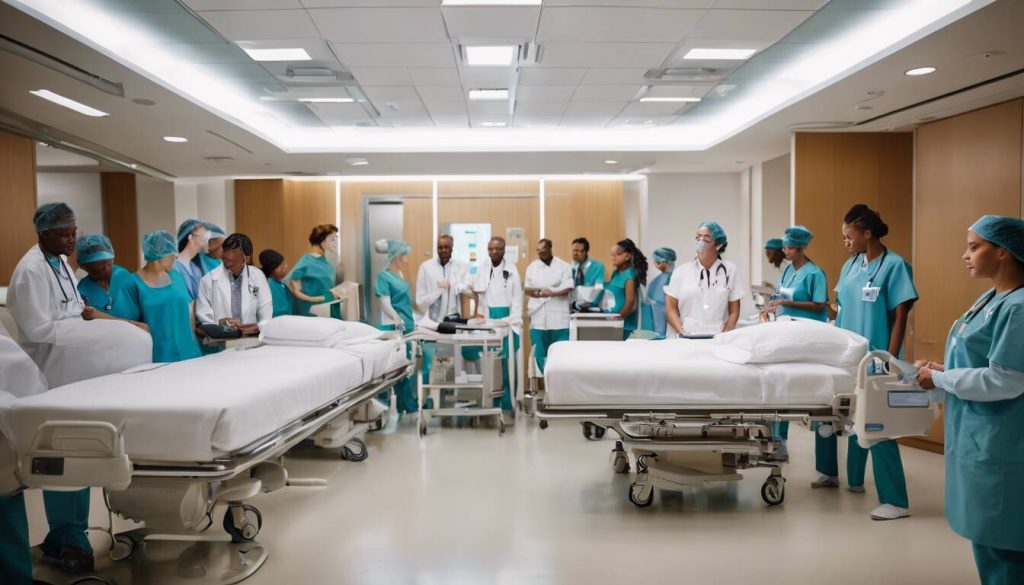
As a bedside nurse, you are at the center of patient care, connecting the dots between different healthcare professionals and the patients they serve. This interconnected web of doctors, specialists, therapists, and administrative staff relies on your insight, observations, and expertise to execute patient care plans effectively. Collaboration is key, and your role as a team player is crucial in ensuring that patients receive comprehensive care.
In this diverse array of healthcare professionals, everyone brings their unique expertise to the table. Physicians diagnose and prescribe treatments, surgeons perform procedures, therapists aid in rehabilitation, and nursing staff provide continuous care. As a bedside nurse, you serve as the linchpin that ties these roles together. Your frontline perspective offers valuable insights into a patient’s condition that other professionals rely on to make informed decisions about their care. In turn, your colleagues provide support and resources that enable you to carry out your role with precision and efficiency.
A successful healthcare team seamlessly integrates each member’s expertise to create a holistic approach to patient care. Effective communication channels foster an environment where information flows freely and each person’s input is valued. By participating actively in team meetings, sharing your assessments and observations, and advocating for your patients’ needs, you contribute to a collaborative atmosphere that promotes exceptional patient care outcomes.
| Benefits of Working in a Healthcare Team |
|---|
| Enhanced Patient Care |
| Professional Growth |
| Efficient Problem-Solving |
| Emotional Support |
By valuing teamwork and actively contributing your knowledge and observations to the broader healthcare team, you play an integral role in delivering excellent patient care. Your collaborative spirit not only ensures that patients receive holistic and tailor-made care but also fosters professional growth by exposing you to diverse ideas and perspectives within the medical field.
Having explored the vital role of a bedside nurse in promoting teamwork and patient care, let’s now delve into the various opportunities available for bedside nurses to advance their careers.
Advancement Opportunities for Bedside Nurses
As a bedside nurse, you are at the heart of patient care, utilizing your skills and knowledge to provide comfort, healing, and support. It’s an essential role, but have you ever thought about what comes next? The nursing journey extends far beyond bedside duties. Many experienced nurses discover a yearning for new challenges, specialization in specific healthcare areas, or even leadership roles.
One common path for experienced bedside nurses is to become a clinical nurse leader. These professionals play a pivotal role in ensuring high-quality patient care by overseeing teams of nurses and focusing on improving patient outcomes. They take part in developing and implementing patient care plans, as well as evaluating staff performance to maintain high standards of care.
Another exciting avenue for advancement is becoming a nurse educator. Nurse educators have the opportunity to shape the future generation of nurses by teaching and mentoring students in educational settings. This role allows experienced nurses to share their wealth of knowledge and practical experience with aspiring nurses, making a meaningful impact on the future of healthcare.
For those passionate about specific areas of healthcare, specializing in critical care, pediatrics, oncology nursing, or other specialized fields presents a rewarding career path. Specializing allows nurses to deepen their expertise in specific medical conditions and patient populations, providing focused and specialized care that can genuinely make a difference in patients’ lives.
Choosing an advancement path often depends on individual interests, strengths, and career goals. Some may thrive in leadership roles, guiding and motivating teams to deliver exceptional patient care. Others may find fulfillment in teaching and mentorship, passing on their expertise to the next generation of nurses. And some may feel drawn to specialized areas of healthcare where they can make a significant impact on patients facing specific health challenges.
The opportunities for advancement for bedside nurses are diverse and offer paths for personal growth, professional development, and the chance to make an even greater impact within the healthcare field.
From understanding the potential pathways for advancement as a bedside nurse, let’s now explore the vital education and training required to excel in this fulfilling profession.
Education and Training for Bedside Nurses
When it comes to nursing, there are several paths that can lead you to a successful career at the bedside. The most common starting points are obtaining an associate degree in nursing (ADN) or a bachelor of science in nursing degree (BSN). An ADN typically takes about 2-3 years to complete and is usually offered at community colleges, while a BSN is a 4-year program available at universities and colleges.
While both degrees enable you to become a registered nurse (RN), a BSN has become increasingly preferred by many healthcare settings due to its more comprehensive approach to patient care. A nurse with a BSN may also have access to broader job opportunities, higher earning potential, and better chances for advancement within the field.
Furthermore, for those seeking to become Advanced Practice Registered Nurses (APRNs) specializing in areas like clinical nursing, nurse anesthesia, or nurse midwifery – an RN license and a master’s degree in nursing is required.
A master’s degree not only equips nurses with advanced clinical knowledge but also offers specialized expertise and leadership skills vital for practicing at the advanced level. It opens doors to roles such as nurse practitioner, clinical nurse specialist, certified registered nurse anesthetist, or certified nurse-midwife. These pivotal roles often involve more responsibility and autonomy in patient care.
In the dynamic field of healthcare, ongoing training and certifications are also common. This continuous education ensures that nurses stay current with the best practices and latest findings in patient care.
For instance, many hospitals require nurses to maintain certifications in Basic Life Support (BLS) and Advanced Cardiac Life Support (ACLS) due to the nature of their work. Additionally, specialty certifications such as Certified Pediatric Nurse (CPN) or Certified Medical-Surgical Registered Nurse (CMSRN) may be pursued by those working in specific areas of healthcare.
Continual education keeps nurses up-to-date with advancements in medical technology, changes in healthcare law and policy, and new treatment methods. This additional training also serves as a platform for professional growth and development within the nursing profession.
Obtaining the relevant education and pursuing ongoing training allows bedside nurses to excel in their roles, adapt to evolving healthcare standards, and provide excellent patient care throughout their careers.