
Accelerate Your Career With An Accredited Master of Science in Nursing (MSN) Degree
Rapid advances in healthcare technology and protocol are breaking the barriers of patient care, creating a greater demand for highly skilled nursing professionals. Are you a Registered Nurse (RN), longing to elevate your role in today’s complex health care environment? Dive into an Accredited Master of Science in Nursing (MSN) degree, the ladder to skyrocket your career to new horizons. The MSN degree is no longer just a title; it’s your key to unlocking high level leadership roles, increased salary potential, and the opportunity to specialize in diverse areas of nursing practice. In this blog post, we will show you how an accredited MSN can fast-track your career trajectory and position you at the forefront of healthcare evolution.
The Master of Science in Nursing (MSN) is a graduate-level program that allows registered nurses to advance their career and specialize in various areas of nursing practice. With an MSN degree, you can pursue roles such as nurse educator, clinical nurse leader, health policy expert, and nurse administrator. It also opens doors to becoming an advanced practice registered nurse (APRN), specializing as a nurse practitioner, clinical nurse specialist, certified registered nurse anesthetist, or certified nurse-midwife. Our website offers comprehensive information on MSN programs, admission requirements, coursework, and career opportunities to guide you further in your research.

The Path to a Master of Science in Nursing (MSN)
Are you a professional seeking to advance your nursing career and make a meaningful impact in healthcare? Pursuing a Master of Science in Nursing (MSN) can be the empowering next step for you. An MSN degree offers a comprehensive education that prepares nurses for advanced clinical practice, leadership roles, and research opportunities. Let’s explore the path to earning an MSN and how it can accelerate your career.
To embark on the path towards an MSN, it’s important to note that most programs require applicants to have a Bachelor of Science in Nursing (BSN) degree or an Associate Degree in Nursing (ADN) with relevant professional experience. If you have a bachelor’s degree in another field, don’t despair! You can still pursue an MSN through entry-into-nursing programs designed specifically for students with a non-nursing bachelor’s degree. These programs provide a bridge between your existing knowledge and the specialized nursing coursework required at the master’s level.
For instance, let’s say you have a bachelor’s degree in psychology and are passionate about merging your understanding of mental health with nursing care. An entry-into-nursing program would equip you with the necessary foundational knowledge and skills while building upon your existing academic background.
Once you’ve met the educational requirements, consider researching different universities and their MSN programs. Look for institutions that are accredited by recognized nursing accreditation bodies such as the Commission on Collegiate Nursing Education (CCNE) or the Accreditation Commission for Education in Nursing (ACEN). Accreditations ensure that the program meets high-quality standards and will contribute to your professional growth.
To apply to an MSN program, typically, prospective students need to submit various documents including official transcripts from previous educational institutions, letters of recommendation, a current resume, and a statement of purpose where you articulate your motivations for pursuing an MSN. While GRE scores may be accepted, many programs do not require them. It’s essential to review the admission criteria specific to each university to ensure you submit a complete and compelling application.
Now that we have explored the path to an MSN, let’s discuss the transition from a bachelor’s to a master’s level of nursing education.
From Bachelors to Masters: The Transition
Transitioning from a bachelor’s degree in nursing to pursuing an MSN involves building upon your existing knowledge and skills while delving deeper into advanced concepts and specialized areas of practice. This shift not only enhances your clinical expertise but also equips you with leadership, research, and critical thinking abilities.
One of the key aspects of this transition is the expansion of your scope of practice. As an MSN-prepared nurse, you’ll gain a broader understanding of healthcare systems, policy development, and evidence-based practice. This advanced knowledge empowers you to take on leadership roles where you can advocate for improved patient care and contribute to decision-making processes that shape healthcare delivery.
Moreover, pursuing an MSN allows you to explore specialized areas within nursing through different tracks or concentrations. These specializations can include but are not limited to Nurse Practitioner (NP), Nurse Educator, Nursing Leadership and Administration, Clinical Nurse Specialist (CNS), or Nurse Anesthetist. Each concentration offers unique coursework and clinical experiences tailored to prepare nurses for their desired career paths.
For instance, suppose you have a passion for working with pediatric patients. Pursuing an MSN with a specialization in Pediatric Nursing would provide you with advanced knowledge in pediatric healthcare, allowing you to serve as a primary care provider for children and play a crucial role in their well-being.
Furthermore, the transition from bachelor’s to master’s level education opens doors for opportunities in research, academia, and policy development. You’ll have the chance to contribute to the advancement of nursing knowledge through evidence-based research and disseminate your findings to impact patient care positively.
Understanding the transition from a bachelor’s degree to an MSN is essential in making informed decisions about your educational journey. In the next section, we will explore various specializations available within MSN programs, allowing you to tailor your education to align with your interests and career goals.
- Transitioning from a bachelor’s degree in nursing to pursuing an MSN offers significant benefits and opportunities for growth. It involves expanding your scope of practice, gaining advanced knowledge in healthcare systems and policy development, and developing specialized skills through various tracks or concentrations.
By pursuing an MSN, you can enhance your clinical expertise while also acquiring leadership, research, and critical thinking abilities. This broader skillset empowers you to advocate for improved patient care and contribute to decision-making processes that shape healthcare delivery.
Specializations within the MSN program allow you to explore specific areas of interest, such as Nurse Practitioner, Nurse Educator, Nursing Leadership and Administration, Clinical Nurse Specialist, or Nurse Anesthetist. Each specialization offers tailored coursework and clinical experiences to prepare you for your desired career path.
Additionally, obtaining an MSN opens doors to opportunities in research, academia, and policy development. You can contribute to the advancement of nursing knowledge through evidence-based research and positively impact patient care by disseminating your findings.
Understanding these aspects of transitioning from a bachelor’s degree to an MSN is crucial for making informed decisions about your educational journey.
Exploring MSN Specializations
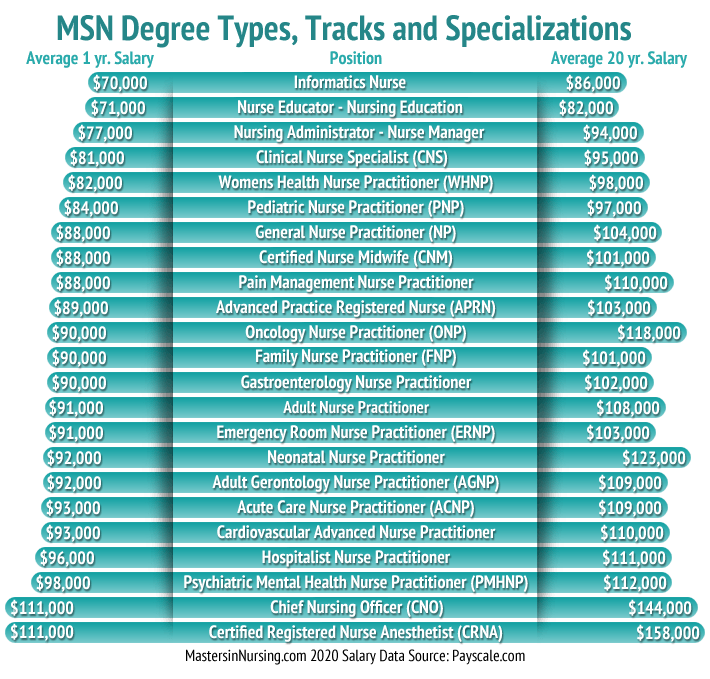
Pursuing a Master of Science in Nursing (MSN) degree can lead to new career opportunities and roles within nursing and healthcare. South University offers five MSN specializations: Family Nurse Practitioner (FNP), Adult Gerontology Nurse Practitioner (AGNP), Nurse Administrator, Nurse Educator, and Nursing Informatics. Each specialization caters to different interests, strengths, and long-term career goals.
The Family Nurse Practitioner (FNP) specialization focuses on providing comprehensive, community-based healthcare across the lifespan. FNPs diagnose and treat acute and chronic health conditions while promoting preventive care. As practitioners, they address diverse medical needs, from routine check-ups to managing complex illnesses. The FNP program emphasizes hands-on experience through a minimum of 750 clinical hours with family health-focused practicums.
Imagine yourself as an FNP working in a primary care setting, where you have the opportunity to build lasting relationships with patients over time. You would be responsible for assessing their health, ordering tests, prescribing medication, and providing essential preventive care. This specialization allows you to make a significant impact on individuals’ lives by delivering quality healthcare services.
On the other hand, the Adult Gerontology Nurse Practitioner (AGNP) specialization caters specifically to the healthcare needs of older adults. AGPCNPs manage age-related illnesses like diabetes or hypertension and work in settings such as nursing homes and geriatric clinics where they provide patient education and preventative care. Clinical practicums in areas like adults and gerontology, reproductive health, and primary care are essential in preparing students for this role.
Moving beyond direct patient care roles, there are other exciting options available for those interested in leadership or education within the nursing field.
The Nurse Administrator specialization involves leadership and management in healthcare facilities. Nurse administrators coordinate nursing staff, oversee financial monitoring, and ensure the delivery of high-quality care. This specialization requires a minimum of 240 practicum hours and emphasizes evidence-based leadership to drive positive change within healthcare organizations.
The Nurse Educator specialization prepares graduates to teach and mentor nurses within educational and healthcare settings. Nurse educators design and evaluate education programs, facilitate learning experiences, and assess competency of nursing students. They spend less time on direct patient care but play a critical role in shaping future generations of nurses. This specialization requires completion of 300 practicum hours to gain hands-on experience in educational practices.
Lastly, the Nursing Informatics specialization focuses on using technology to enhance patient care, communication, education, and overall facility operations. Nursing informaticists plan the use of electronic health records (EHRs) and data analytics to improve decision-making processes and optimize patient outcomes. This specialization demands 240 practicum hours for practical application and understanding of information systems within a healthcare setting.
As you explore these specializations, consider your passions, strengths, and long-term career goals. Each MSN specialization offers unique opportunities for growth and impact within the nursing field. Remember that choosing the right specialization is a personal decision that should align with your interests and aspirations. Take the time to delve deeper into each area of focus and envision yourself thriving in that particular role.
- According to the Bureau of Labor Statistics, job prospects for nurse practitioners with an MSN degree are expected to grow by 45% from now until 2030, much faster than the average growth rate for all occupations.
- A study conducted by the American Association of Colleges of Nursing (AACN) reported that as of April 2023, nearly 85% of full-time Master’s degree-prepared Nurse Educators earned salaries ranging from $75,000 to over $100,000 annually.
- The National Center for Education Statistics reveals that there has been a more than 55% increase in enrollments into MSN programs across the United States within the last decade with more nurses seeking advanced degrees.
Specialty Selection: Factors to Consider
When considering which MSN specialization to pursue, several factors come into play. Here are some key considerations:
- Interests: Reflect on what aspects of nursing excite you the most. Do you thrive in direct patient care or prefer a role that involves leadership or education?
- Skills: Assess your strengths and abilities. Are you more inclined towards advanced clinical practice or do you possess strong organizational and management skills?
- Career Goals: Consider your long-term objectives within the nursing profession. Are you looking to specialize in a specific area, advance into leadership positions, or contribute to nursing education?
- Job Market: Research the demand for different MSN specializations in your area. Investigate potential job opportunities and growth prospects for each specialization.
- Program Offerings: Explore the curriculum and learning opportunities offered within each specialization. Ensure that the program aligns with your educational needs and goals.
- Clinical Requirements: Take note of the clinical practicum hours required for each specialization. Consider your availability, work commitments, and any other factors that may impact your ability to fulfill these requirements.
- Networking Opportunities: Investigate whether the specialization offers networking opportunities with professionals in your desired field. Building connections can open doors to mentorship, collaborations, and future career prospects.
Selecting the right MSN specialization requires careful consideration of these factors. Reflect on your passions, skills, and aspirations while also keeping in mind the practical aspects such as job market demand and program offerings. Ultimately, choosing a specialization that aligns with both your professional goals and personal fulfillment will set you on a path for success in your nursing career.
Key Specialty Profiles: Roles and Duties
A Master of Science in Nursing (MSN) degree provides nurses with the opportunity to explore various specialty profiles, each with its unique roles and duties. Let’s take a closer look at some key MSN specialty profiles and their corresponding responsibilities.
Think of MSN specialty profiles as different branches of a tree, each requiring specific skills and knowledge to flourish.
One prominent MSN specialty profile is that of a Clinical Nurse Specialist (CNS). As a CNS, you would have advanced expertise in a particular clinical field such as pediatrics, gerontology, or psychiatric care. Your responsibilities may encompass providing direct patient care while also assuming leadership roles in healthcare organizations. You might collaborate with interdisciplinary teams to develop evidence-based protocols and guidelines, ensuring optimal patient outcomes.
Another valuable MSN path is becoming a Nurse Educator. In this role, you would be responsible for teaching aspiring nurses the practical and theoretical aspects of nursing practice. You’ll design curriculum, facilitate learning experiences both in classrooms and clinical settings, and assess students’ progress. The impact you make as a nurse educator goes beyond classroom walls, shaping the future of nursing by imparting essential knowledge and skills to upcoming generations.
For those driven by research and inquiry, an MSN can lead to a career as a Nurse Scientist. In this role, you would focus on advancing healthcare through research, contributing to cutting-edge discoveries and innovations that shape clinical practice. With a strong foundation in evidence-based practice and data analysis, your work as a nurse scientist would help improve patient outcomes by informing healthcare policies, protocols, and standards.
These are just a few examples of the diverse career paths available to those who pursue an MSN degree. Each specialty profile comes with its unique set of roles, duties, and opportunities for growth. By honing specialized skills and knowledge through an MSN program, you can broaden your professional horizons and contribute to enhanced patient care in a variety of ways.
The MSN Advantage: Beyond the Bachelor’s Degree

While a Bachelor of Science in Nursing (BSN) provides a solid foundation for a nursing career, an MSN degree offers unique advantages that go beyond what a bachelor’s degree can offer. Let’s explore the benefits of pursuing an MSN degree and how it can accelerate your career in nursing.
First and foremost, an MSN degree opens up advanced practice roles that allow you to have a more direct impact on patient care. As an Advanced Practice Registered Nurse (APRN), you may choose to become a Family Nurse Practitioner, Certified Nurse Midwife, Certified Registered Nurse Anesthetist, or Psychiatric-Mental Health Nurse Practitioner, among others. These advanced practice roles give you the autonomy to diagnose and treat patients, prescribe medications, and provide comprehensive healthcare services.
In addition to advanced practice roles, an MSN degree equips you with the necessary skills to take on leadership positions within healthcare organizations. With courses focusing on healthcare management and administration, you can pursue roles such as nurse manager, nurse executive, or even chief nursing officer. These leadership positions enable you to influence organizational policies, drive quality improvement initiatives, and shape the future of nursing practice at a higher level.
Moreover, an MSN degree provides opportunities for specialization in niche areas such as nursing informatics or nursing education. As technology continues to transform healthcare delivery systems, there is an increasing demand for nurses who can effectively navigate and leverage health information systems. This specialization enhances your marketability and opens doors to careers in informatics-specializing roles where you contribute to optimizing electronic health records and implementing innovative technologies.
Finally, an MSN degree offers higher earning potential compared to registered nurses without an advanced degree. The specialized knowledge and skills acquired through an MSN program make you a valuable asset in the healthcare industry, commanding higher salaries and better benefits. Additionally, an MSN degree can pave the way for pursuing doctoral studies, further advancing your career and contributing to nursing research and scholarship.
With a multitude of career opportunities and unique advantages, it’s no wonder that nurses with an MSN degree are well-positioned to excel in today’s rapidly evolving healthcare landscape.
Career Opportunities With an MSN
A Master of Science in Nursing (MSN) degree opens up a wide range of exciting career opportunities for aspiring nurses. With this advanced level of education and specialized knowledge, you can pursue positions that go beyond what a bachelor’s degree might offer. Let’s explore some of the career paths you can embark on with an MSN.
One such career option is becoming a Nurse Practitioner (NP). As an NP, you would have the authority to diagnose illnesses, prescribe medications, and provide primary care to patients. This role offers a higher level of autonomy and responsibility in patient care, allowing you to make a significant impact on individuals’ health outcomes.
Another potential career path with an MSN is that of a Clinical Nurse Specialist (CNS). As a CNS, you would have expertise in a specific area of healthcare, such as mental health or pediatrics. Your role would involve providing direct patient care, designing and implementing evidence-based practices, and acting as a resource for other healthcare professionals.
For those interested in leadership and management roles, pursuing an MSN can lead to careers as Nurse Managers or Nursing Administrators. In these positions, you would oversee nursing staff, manage budgets, and develop policies and procedures to ensure efficient and effective patient care delivery.
Additionally, an MSN can open doors to becoming a Nurse Educator. In this role, you would have the opportunity to shape the future generation of nurses by teaching in academic settings or providing staff development within healthcare organizations.
These are just a few examples of the numerous career paths you can explore with an MSN. The demand for highly skilled and specialized nurses continues to grow in various healthcare settings, making an MSN a valuable asset in advancing your nursing career.
Now that we have explored the exciting career opportunities that await you with an MSN degree let’s discuss how you can achieve this milestone through a roadmap to earning an MSN.
Roadmap to Earning an MSN
Embarking on the journey of earning a Master of Science in Nursing (MSN) requires careful planning and dedication. Here is a roadmap to help guide you through the process:
- Research Program Options: Begin by exploring accredited nursing schools that offer MSN programs. Look into their curriculum, faculty, program outcomes, and any specialized tracks or concentrations they offer. Choose a program that aligns with your career goals and interests.
- Meet Entry Requirements: Each MSN program has specific entry requirements, including a bachelor’s degree in nursing (BSN), a minimum GPA, letters of recommendation, and sometimes work experience as a registered nurse (RN). Make sure you meet these requirements before applying.
- Prepare for Entrance Exams: Some MSN programs require applicants to take graduate-level entrance exams like the GRE or the Miller Analogies Test (MAT). Prepare for these exams by utilizing study materials and practice tests to improve your chances of success.
- Submit Applications: Once you have identified your preferred MSN programs and met the requirements, it’s time to submit your applications. Take care to follow each program’s application instructions and ensure all required documents are included.
- Financial Planning: Consider the financial aspect of pursuing an MSN degree. Research available scholarships, grants, and financial aid options specific to nursing students. Create a budget plan to cover tuition fees, books, and other expenses during your studies.
- Engage in Coursework: Once accepted into an MSN program, immerse yourself in coursework that explores advanced nursing concepts, research methodologies, leadership skills, and specialized clinical practice. Take advantage of opportunities for hands-on experience and networking with professionals in your field.
- Specialize and Tailor Your Education: Depending on your interests and career aspirations, consider pursuing specialization within your MSN program. This could involve selecting a specific track or concentration, such as family nurse practitioner, nursing education, or nurse leadership.
- Clinical Practice and Residency: MSN programs often include clinical rotations and residency experiences to provide practical skills and in-depth exposure to the chosen specialization. Embrace these opportunities to gain valuable real-world experience and build professional connections.
- Prepare for Certification: Depending on your chosen career path, you may need to obtain certification in your specialty area. Research the certification requirements and prepare accordingly during your MSN program.
- Graduation and Career Advancement: After successfully completing your MSN program and obtaining any necessary certifications, it’s time to step into the next phase of your nursing career. Leverage your advanced knowledge, skills, and network to pursue rewarding job opportunities or consider further academic pursuits like doctoral programs.
Entry Requirements and Core Curriculum
To pursue a Master of Science in Nursing (MSN) degree, there are certain entry requirements that applicants must meet. Generally, individuals need to hold a Bachelor of Science in Nursing (BSN) degree from an accredited program. However, there are also RN-to-MSN bridge programs available for registered nurses who have completed an associate degree or diploma program. It’s worth noting that some universities offer entry-level MSN programs for individuals with a bachelor’s degree in a different discipline.
Once the entry requirements are met, students embark on a comprehensive core curriculum that forms the foundation of their MSN education. The core curriculum includes essential courses covering various aspects of nursing practice and advanced knowledge. Let’s take a closer look at some key areas typically covered in the core curriculum of an MSN program.
One significant component of the core curriculum is advanced nursing theory and research. This coursework provides students with a deeper understanding of nursing concepts and theories, as well as the skills necessary to critically analyze research studies. Students learn how to apply evidence-based practice in their clinical decision-making and contribute to nursing research through their own scholarly projects.
Another crucial aspect covered in the core curriculum is advanced pathophysiology. This coursework explores the physiological processes underlying diseases and disorders seen across the lifespan. By gaining an understanding of pathophysiology, MSN students can develop expertise in assessing, diagnosing, and managing various health conditions.
In addition to pathophysiology, MSN programs often include advanced pharmacology courses. These courses focus on the study of medications, including their mechanisms of action, therapeutic uses, potential side effects, and interactions with other drugs. Having this knowledge equips advanced practice nurses with the skills necessary to safely prescribe and manage medications for their patients.
To ensure competency in providing holistic care, MSN programs also incorporate coursework in advanced physical assessment. This involves learning advanced techniques for thorough physical examinations, including specialized assessments for different population groups. Advanced physical assessment skills enable MSN graduates to identify subtle signs and symptoms, make accurate diagnoses, and provide comprehensive care.
For instance, an MSN student specializing in Family Nurse Practitioner (FNP) may undergo rigorous training in assessing patients of all ages, from newborns to older adults. This encompasses conducting comprehensive histories, performing focused physical examinations, and interpreting diagnostic tests, all necessary for providing primary care across the lifespan.
In addition to the courses mentioned above, the core curriculum of an MSN program typically includes coursework in areas such as microbiology, anatomy and physiology, statistics, nursing leadership and management, and healthcare policy. These foundational courses provide a well-rounded education encompassing the essential knowledge and skills needed for advanced nursing practice.
It’s important to note that while the core curriculum provides a solid foundation, MSN programs also offer specialization tracks where students can focus on areas such as Family Nurse Practitioner, Psychiatric Mental Health Nurse Practitioner, Clinical Nurse Specialist, Certified Registered Nurse Anesthetist, or Certified Nurse-Midwife. These specialization tracks include additional coursework and clinical experiences tailored to the respective roles and patient populations.
As you can see, the entry requirements pave the way for aspiring nurses to enroll in an MSN program, while the core curriculum provides a comprehensive education covering essential aspects of nursing practice. Armed with this knowledge and expertise gained through their specialization track, graduates of MSN programs are well-prepared to embark on rewarding careers as advanced practice nurses.