
The Best Graduate Nursing Degree Pathways To Advance Your Career
With the advent of futuristic medical technologies, coupled with growing healthcare demands, the nursing profession isn’t what it used to be – it has morphed into a dynamic, fast-paced world demanding ever more sophisticated knowledge and skills. To nurse in the future, you’ll need an arsenal of expertise beyond basic caregiving. Guessing just where these changes might take you? Look no further. This blog post unravels the most rewarding graduate nursing degree pathways that will not only catapult your career into the future but will also position you at the top rung of a rapidly advancing healthcare industry. By exploring these pathways, we’ll show you how to become a front-runner in delivering innovative solutions to complex health challenges.
Our website provides a comprehensive guide to various graduate degree pathways in nursing. These include Baccalaureate to Master’s Degree programs, MSN Bridge Programs for RNs with an ADN, and Direct-Entry Master’s Degree programs for individuals with a non-nursing bachelor’s degree. Additionally, we cover Dual Master’s Degree programs that combine nursing with related fields, such as business or public health. Each pathway has unique requirements and durations, allowing aspiring nurses to choose the option that best fits their educational background and career goals.
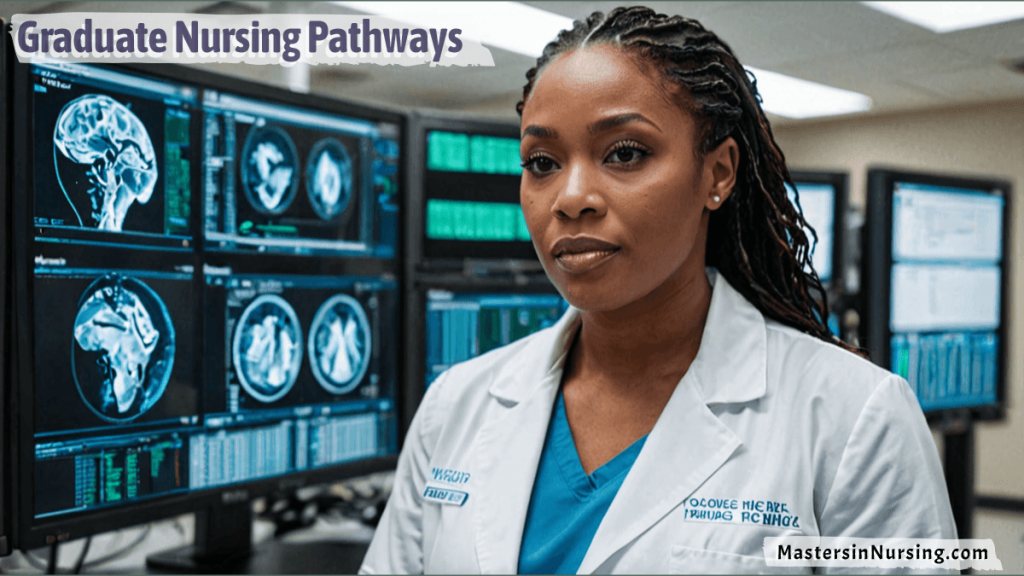
Exploring Graduate Nursing Degree Pathways
Congratulations on deciding to take your nursing career to the next level with a graduate degree! Pursuing a graduate nursing degree pathway can open up a world of opportunities and propel your career forward. But with various options available, it’s essential to explore and understand the different pathways before making a decision.
There are three common graduate nursing degree pathways that you can consider: Baccalaureate to Master’s degree (BSN to MSN), MSN Bridge program, and Direct-Entry Master’s degree. Each pathway is designed to meet the unique needs and goals of individuals at different stages of their nursing careers.
The Baccalaureate to Master’s Degree pathway is an excellent option for registered nurses (RNs) who already have a Bachelor of Science in Nursing (BSN) degree. This pathway typically lasts 2-3 years and builds upon the foundation of the BSN program. It provides advanced coursework and clinical experiences that prepare nurses for specialized roles such as nurse practitioners, nurse researchers, nurse administrators, and nurse educators.
An MSN Bridge program, on the other hand, is specifically designed for RNs with an Associate Degree in Nursing (ADN) who want to pursue a master’s degree without completing a BSN first. This program combines the last two years of a BSN curriculum with a master’s in nursing curriculum, resulting in a comprehensive 3-4 year program. While this pathway allows ADN-prepared nurses to earn an MSN, some argue that completing a BSN before pursuing an MSN provides a stronger foundation for advanced practice.
The third pathway is known as the Direct-Entry Master’s Degree, which is geared towards individuals who already hold a non-nursing bachelor’s degree but wish to transition into nursing. This accelerated program usually lasts from 18 months to three years and provides the necessary nursing education and clinical training to become a registered nurse. It’s a great option for those looking for a career change or to combine their existing knowledge with nursing practice.
For example, let’s say you have a bachelor’s degree in psychology and have decided that you want to pursue a career in psychiatric nursing. The Direct-Entry Master’s Degree pathway would allow you to obtain your nursing license and gain specialized knowledge in psychiatric nursing.
Keep in mind that the duration and specific requirements of each pathway may vary depending on the institution and program. Additionally, within each pathway, there are various specializations available that cater to specific areas of interest such as Nurse Practitioner, Clinical Nurse Specialist, Certified Nurse Midwife, Public Health, Nursing Education, Nursing Administration, and Nursing Informatics.
Now that we’ve explored the different graduate nursing degree pathways available, let’s take a closer look at the Baccalaureate to Master’s Degree pathway and what it entails.
- Congratulations on choosing to pursue a graduate nursing degree! There are three common pathways you can consider: BSN to MSN, MSN Bridge program, and Direct-Entry Master’s degree. The BSN to MSN pathway is for those with a BSN and prepares nurses for specialized roles. The MSN Bridge program is designed for ADN-prepared nurses who want an MSN but may benefit from completing a BSN first. The Direct-Entry Master’s Degree is for individuals with a non-nursing bachelor’s degree who want to transition into nursing. Each pathway has its own benefits and specific requirements may vary. Specializations within each pathway cater to specific interests such as Nurse Practitioner or Nursing Education.
Baccalaureate to Master’s Degree
The Baccalaureate to Master’s Degree pathway is an appealing choice for nurses who already hold a BSN degree and wish to advance their careers further. This pathway allows nurses to deepen their knowledge in specialty areas while also providing opportunities for leadership roles within the healthcare industry.
To embark on this pathway, you will typically need to have completed a BSN program from an accredited institution and possess an active registered nurse (RN) license. Admission requirements may also include letters of recommendation, a personal statement or essay, and an interview.
Once accepted into a Baccalaureate to Master’s Degree program, you will engage in advanced coursework focused on your chosen specialization. This may include specialized clinical rotations, research projects, and theoretical coursework. You will also develop critical skills in areas such as healthcare management, evidence-based practice, population health management, and advanced nursing practice.
Upon completion of the program, you will earn a Master of Science in Nursing (MSN) degree and be eligible for advanced practice roles such as nurse practitioner, clinical nurse specialist, or nurse educator. This pathway positions you for greater autonomy in patient care, leadership opportunities, and the ability to drive healthcare innovation.
For instance, if your passion lies in family medicine, pursuing a Baccalaureate to Master’s Degree pathway with a specialization in Family Nurse Practitioner would equip you with the knowledge and skills to provide comprehensive primary care to individuals of all ages.
It’s important to note that different specializations within the Baccalaureate to Master’s Degree pathway may have varying requirements, including additional clinical hours or certification exams. Additionally, each state has unique licensing regulations for advanced practice nurses, so it’s crucial to research and understand the specific requirements in your desired practice area.
Having explored the Baccalaureate to Master’s Degree pathway, let’s now delve into the MSN Bridge Program as another option for advancing your nursing career.
MSN Bridge Program
The MSN (Master of Science in Nursing) Bridge program is designed for registered nurses (RNs) who already hold a Bachelor of Science in Nursing (BSN) degree. This pathway offers a streamlined option to pursue a master’s degree without having to complete another BSN program. By leveraging their prior education, RNs can accelerate their journey towards advanced nursing roles and expand their career opportunities.
The MSN Bridge program typically lasts 2-3 years and builds upon the foundational knowledge gained during the BSN program. Students delve deeper into specialized areas of nursing and develop advanced skills in patient care, leadership, research, and education. This pathway is particularly beneficial for those aspiring to become nurse practitioners, nurse researchers, nurse administrators, or nurse educators.
To qualify for an MSN Bridge program, applicants must have an active RN license and meet specific admission requirements set by the university or college offering the program. These requirements may include a minimum GPA, letters of recommendation, a personal statement, and an interview.
Imagine Helen, a dedicated RN with a passion for providing holistic care to patients. After completing her BSN degree and gaining valuable experience in different healthcare settings, she decided to pursue an advanced practice role as a Family Nurse Practitioner (FNP). Helen enrolled in an MSN Bridge program at a reputable nursing school that offered FNP specialization. Through this program, she deepened her understanding of primary care theory and clinical skills while also honing her ability to diagnose and treat patients across the lifespan. With her MSN degree in hand, Helen now enjoys a rewarding career as an FNP, making a positive impact on individuals and families in her community.
It’s important to note that each MSN Bridge program may offer various specializations within the field of nursing. Some popular specializations include Nurse Practitioner (NP), Clinical Nurse Specialist (CNS), Certified Nurse Midwife (CNM), Public Health, Nursing Education, Nursing Administration, and Nursing Informatics. These specializations have different time commitments, graduation requirements, and job responsibilities.
Direct-Entry Master’s Degree
The Direct-Entry Master’s Degree pathway is designed for individuals who hold a bachelor’s degree in a non-nursing field but are looking to transition into the nursing profession. This pathway allows candidates to pursue an accelerated master’s degree in nursing without first obtaining a bachelor’s degree in nursing (BSN).
The duration of a Direct-Entry Master’s program can vary depending on the institution and the specific curriculum, ranging from 18 months to three years. During this intensive program, students undergo rigorous coursework that covers both the foundational aspects of nursing as well as advanced concepts. They receive education in areas such as anatomy and physiology, pharmacology, health assessment, nursing theory and practice, research methodology, and clinical experiences.
For instance, let’s consider Sarah, who holds a bachelor’s degree in psychology and has always been passionate about patient care. Instead of going back to school for another four years to complete a BSN program, Sarah opted for a Direct-Entry Master’s program. Throughout her journey, she received comprehensive training in various nursing specialties while also gaining hands-on experience through clinical rotations. This pathway allowed Sarah to quickly transition into the rewarding field of nursing, equipped with both theoretical knowledge and practical skills.
It’s worth noting that graduates of Direct-Entry Master’s programs are eligible to sit for the NCLEX-RN exam upon completion of their coursework. Passing this exam is essential to obtain licensure as a registered nurse (RN) and begin practicing in healthcare settings.
Now that we have gained insights into both MSN Bridge programs and Direct-Entry Master’s programs, it’s important to acknowledge that some individuals may seek a combination of two related fields to expand their career prospects and assume advanced leadership roles. Let’s explore the concept of Dual Master’s Degrees.
Dual Master’s Degree
If you’re looking to advance your career in nursing while also gaining expertise in another related field, pursuing a dual master’s degree could be an excellent option. A dual master’s degree combines two related programs, such as an MSN with an MBA or MPH, and prepares candidates for advanced leadership roles that require understanding of both nursing practice and healthcare administration. These programs typically take 3-4 years to complete, as they encompass the coursework from both disciplines.
A dual master’s degree allows you to expand your knowledge beyond clinical practice and develop skills in areas like management, finance, public health, or informatics. For example, if you aspire to become a nurse manager or administrator within a healthcare organization, combining an MSN with an MBA can provide you with the necessary business acumen. On the other hand, if your passion lies in population health and policy-making, pairing an MSN with an MPH can equip you with the expertise needed to address public health challenges.
Let’s consider the case of Sarah. She is a registered nurse who has been working at a hospital for several years and has developed a keen interest in improving patient outcomes by implementing evidence-based practices. However, she also wants to contribute to healthcare on a broader scale by influencing policies and promoting community health initiatives. In this scenario, Sarah decides to pursue a dual master’s degree in Nursing and Public Health (MSN/MPH).
During her program of study, Sarah learns about epidemiology, biostatistics, social determinants of health, program planning and evaluation, and various other subjects specific to public health. Simultaneously, she deepens her clinical nursing knowledge through coursework on advanced practice nursing, healthcare ethics, research methods, and leadership.
The beauty of a dual master’s degree is that it opens doors to diverse career opportunities. Graduates can find themselves leading healthcare organizations or departments, serving as consultants or strategists, working in health policy and advocacy, or even teaching in academic settings.
Now that we’ve explored the potential benefits of pursuing a dual master’s degree in nursing, let’s shift our focus to another crucial aspect of graduate nursing degrees – specializations.
Specializations in Graduate Nursing Degrees
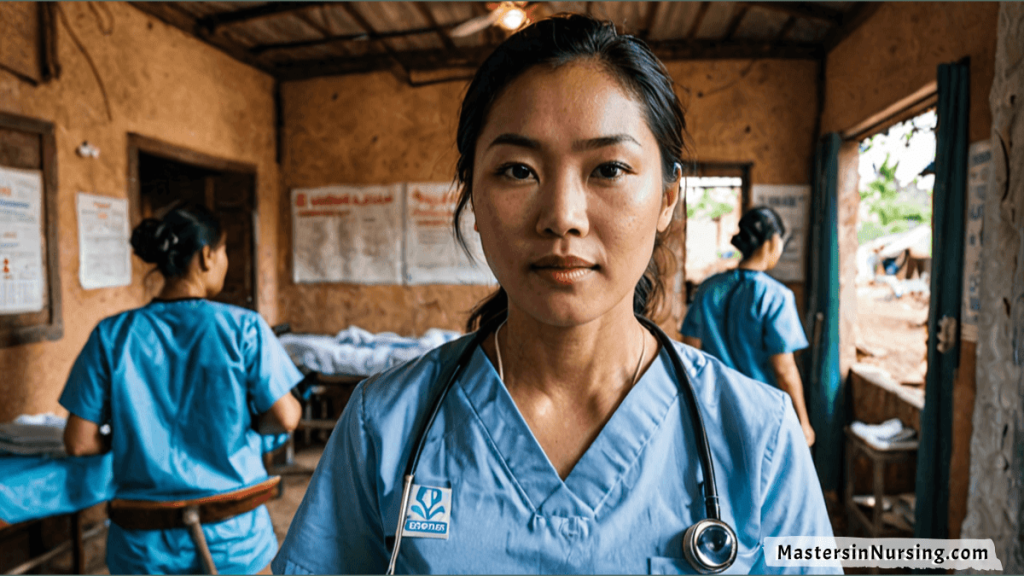
Graduate nursing degrees offer a wide array of specializations, catering to various interests and career goals. Whether you aspire to be on the frontlines of patient care as a nurse practitioner or utilize your expertise in research as a nurse researcher, specializations allow you to hone your skills and knowledge in specific areas of nursing practice.
One popular specialization is becoming a Nurse Practitioner (NP), which offers the opportunity to provide comprehensive healthcare services across the lifespan. NPs take on advanced roles, diagnosing and treating patients, prescribing medications, and often serving as primary healthcare providers. They can specialize further within areas such as family medicine, pediatrics, gerontology, psychiatric-mental health, or acute care.
Other specializations include Clinical Nurse Specialist, who focuses on a particular patient population or specialty area and provides expert clinical consultation; Certified Nurse Midwife, who specializes in women’s health, prenatal care, labor and delivery, and postpartum care; Public Health Nurse, who works on improving community health outcomes through education, prevention programs, and outreach initiatives; Nurse Educator, who plays a vital role in shaping future nurses by teaching and mentoring students; Nursing Administrator, overseeing various aspects of healthcare organizations; and Nursing Informatics, leveraging technology to improve nursing practice and healthcare systems.
The choice of specialization depends on your passion, strengths, and desired career path. Each specialization has its own unique time commitments, graduation requirements, job responsibilities, and salary expectations. It’s essential to research each specialization thoroughly and consider how it aligns with your long-term goals and personal aspirations.
Selecting a specialization is akin to deciding which path to take in a vast forest. Each path leads to different destinations, offering unique experiences and opportunities. Take the time to explore and reflect on your interests and desired impact in the world of nursing.
Nurse Practitioner
If you are seeking to advance your career in the field of nursing, becoming a Nurse Practitioner (NP) is an excellent pathway to consider. Nurse Practitioners are highly skilled and specialized professionals who provide comprehensive healthcare services to patients of all ages. They possess advanced clinical knowledge and training that enables them to diagnose and manage acute and chronic illnesses. Additionally, NPs have the authority to prescribe medications, order diagnostic tests, and even perform certain medical procedures. In many states, they can practice independently or collaborate with physicians, depending on their scope of practice.
The role of a Nurse Practitioner is paramount in addressing the growing demand for primary care providers across the United States. With the shortage of physicians in rural areas and underserved communities, NPs play a vital role in bridging this gap by providing accessible and quality healthcare services. They work across various healthcare settings such as hospitals, clinics, private practices, and even in patients’ homes. The autonomy and flexibility that comes with being an NP allows for a rewarding and fulfilling career.
To become a Nurse Practitioner, you will need to pursue a Master’s degree specifically tailored to the NP role. This program typically requires a Bachelor’s degree in Nursing (BSN) as a prerequisite. During your master’s program, you will undergo intensive coursework focused on advanced pathophysiology, pharmacology, physical assessment, and specialized courses related to your chosen population focus – which could be family medicine, pediatrics, adult-gerontology, women’s health, or psychiatric-mental health.
Let’s say you’re passionate about working with children and providing pediatric care. As an aspiring Pediatric Nurse Practitioner (PNP), your curriculum would include courses specifically aimed at understanding child growth and development, common pediatric illnesses, developmental screenings, immunizations, and strategies for promoting wellness in children.
In addition to completing coursework, aspiring NPs must fulfill clinical practice hours to gain hands-on experience. This clinical training allows you to apply the knowledge and skills acquired in the classroom to real-world situations under the supervision of experienced healthcare providers.
Moving on to another exciting pathway within the realm of advanced nursing, let’s explore the role of a Clinical Nurse Specialist (CNS).
Clinical Nurse Specialist
A Clinical Nurse Specialist (CNS) is a highly specialized nursing professional who focuses on providing expert care within specific patient populations or healthcare settings. CNSs work collaboratively with interdisciplinary teams and are responsible for improving patient outcomes, developing evidence-based protocols, providing education and mentoring to nursing staff, and advocating for changes in healthcare policies and procedures based on their expertise.
Unlike Nurse Practitioners, CNSs typically do not have prescriptive authority but instead focus on providing holistic care through their advanced clinical knowledge and skills. They play an integral role in bridging communication gaps between patients, nurses, physicians, and other healthcare professionals. This collaborative approach ensures that patients receive high-quality care tailored to their specific needs.
CNSs can specialize in various areas such as critical care, oncology, psychiatric-mental health, pediatrics, geriatrics, or community health. For example, if you have a passion for working with individuals experiencing mental health challenges, you may choose to pursue a specialization as a Psychiatric-Mental Health Clinical Nurse Specialist (PMH-CNS). In this role, you would utilize your advanced psychological understanding to provide comprehensive care for patients struggling with mental illness.
Think of Clinical Nurse Specialists as expert consultants within their specialized fields. Just like how a consultant brings deep knowledge and expertise in a specific area to solve complex problems or improve processes within an organization, a CNS provides specialized expertise within the realm of patient care.
To become a Clinical Nurse Specialist, you will need to complete a Master’s degree in Nursing with a focus on the CNS role. This program will provide you with advanced knowledge and skills in your chosen specialty, as well as coursework in areas such as advanced pathophysiology, pharmacology, health assessment, research methods, and healthcare leadership.
Let’s consider the example of aspiring Critical Care Clinical Nurse Specialist (CC-CNS). In addition to mastering the complexities of critical care concepts, you would study advanced topics related to hemodynamic monitoring, ventilator management, pharmacotherapy in critical care, and evidence-based practices for improving patient outcomes in intensive care settings.
Now that we have explored the roles and responsibilities of both Nurse Practitioners and Clinical Nurse Specialists, the next section will shed light on the fascinating world of Nursing Administration.
Nursing Administration
If you have a passion for healthcare, leadership, and management, a graduate degree in nursing administration can pave the way for an exciting and fulfilling career. Nursing administration focuses on the operational aspects of healthcare delivery systems, equipping nurses with the skills they need to oversee departments, manage budgets, and ensure quality patient care. This specialized path within nursing offers a unique blend of clinical expertise and administrative acumen.
Imagine being the director of nursing in a bustling hospital, responsible for coordinating patient care, managing staff resources, and implementing strategic initiatives to improve healthcare outcomes. Or picture yourself working as a nurse manager in a long-term care facility, overseeing a dedicated team of nurses and ensuring the smooth operation of daily activities.
A graduate degree in nursing administration provides comprehensive training in areas such as healthcare policy, finance, human resources, organizational behavior, and leadership. Students learn how to navigate complex healthcare systems, analyze data to inform decision-making, and effectively communicate with interdisciplinary teams to drive positive change.
By pursuing a graduate degree in nursing administration, you gain the knowledge and skills necessary to take on critical roles within healthcare organizations. Graduates often find employment opportunities in hospitals, clinics, government agencies, academic institutions, and other healthcare settings.
Now that we have explored the field of nursing administration and its potential career prospects let’s delve into the wide range of career opportunities available for graduate nurses.
Career Opportunities for Graduate Nurses

A graduate degree in nursing opens up numerous career opportunities for aspiring nurses who are looking to advance their professional journey beyond traditional bedside care. Advanced practice nurses (APNs) are in high demand across various specialties due to their advanced education and clinical expertise. Let’s explore some of the career paths that await graduates with advanced degrees in nursing:
1. Nurse Practitioner: Nurse practitioners provide primary care services to patients of all ages. They assess patients’ health conditions, diagnose illnesses, prescribe medications, and offer preventive care. Nurse practitioners can specialize in areas such as family practice, pediatrics, geriatrics, or mental health.
2. Nursing Educator: If you have a passion for teaching and sharing knowledge, a career as a nursing educator might be for you. Nursing educators work in academic settings, training the next generation of nurses and shaping the future of healthcare.
3. Nurse Anesthetist: Nurse anesthetists play a crucial role in surgical procedures by administering anesthesia and monitoring patients’ vital signs throughout the process. They work closely with surgeons and anesthesiologists to ensure safe and effective pain management during surgeries.
4. Nurse Midwife: Nurse midwives provide comprehensive prenatal, delivery, and postpartum care to women. They support natural childbirth experiences and also provide family planning services and gynecological care.
These are just a few examples of the many diverse career paths that await graduate nurses. The demand for advanced practice nurses continues to grow as healthcare needs evolve and expand.
Whether you choose to specialize in a specific field or pursue leadership roles within healthcare administration, obtaining a graduate degree in nursing opens doors to higher-paying positions with increased responsibilities, job security, and opportunities for professional growth.
Remember that choosing the right career path should align with your personal interests, long-term goals, and values as a nurse. Take time to explore different options, seek guidance from mentors or professionals in the field, and consider what brings you joy and fulfillment in your nursing practice.
Salary Expectations by Specializations
When considering pursuing a graduate nursing degree, it’s natural to wonder about the potential financial rewards that await you. The field of nursing is diverse and offers numerous specialties, each with its own salary expectations. Let’s explore some of the highest-paying specializations within the nursing profession.
One of the top-paying specialties in nursing is Nurse Anesthetist, with an average annual salary of around $181,040. These highly skilled professionals play a crucial role in administering anesthesia during surgical procedures, ensuring patient safety and comfort. Their expertise and ability to handle critical situations are reflected in their compensation.
Another well-compensated nursing field is Nurse Practitioner, with an average annual salary ranging from $108,000 to $135,000 depending on the specialty. As advanced practice registered nurses (APRNs), nurse practitioners provide comprehensive healthcare services, including diagnosing and treating illnesses, prescribing medication, and promoting disease prevention.
Nurse Midwives also enjoy favorable earning potential, with an average annual salary between $108,810 and $164,410. These specialized nurses focus on providing reproductive health and prenatal care to women while assisting during childbirth. Their holistic approach to maternity care contributes to their vital role in this field.
Other financially rewarding specialties include Clinical Nurse Specialists, Pediatric Nurses, and Psychiatric-Mental Health Nurses. It’s important to note that these figures serve as general guidelines and can vary based on factors such as years of experience, geographical location, and level of education.
It’s worth considering your areas of interest when exploring potential specializations within the nursing profession. While salary expectations are certainly significant for many individuals pursuing a graduate nursing degree, it’s also important to find fulfillment in the work you do and make a positive impact on patients’ lives.
Preparing for a Graduate Nursing Degree
Embarking on a graduate nursing degree requires careful preparation to ensure a smooth and successful journey. Here are some essential steps to consider as you prepare for this important academic pursuit.
First, it’s crucial to meet the admissions requirements of your chosen graduate nursing program. This typically includes holding a bachelor’s degree in nursing or a related field, an active registered nurse (RN) license, and meeting minimum GPA criteria. Some programs may also require prerequisite coursework in subjects such as statistics, psychology, or anatomy.
In addition to meeting the academic requirements, it’s important to gather all necessary documents for your application. This may include official transcripts, letters of recommendation from colleagues or professors, a personal statement outlining your goals and aspirations, and a well-constructed resume highlighting your relevant experience.
Financial considerations also play a significant role in preparing for a graduate nursing degree. Explore various financial aid options available to you, such as scholarships, grants, work-study programs, and loans. Researching and applying for these opportunities well in advance can alleviate potential financial burdens and allow you to focus on your studies.
Lastly, taking time to familiarize yourself with the curriculum and structure of the graduate nursing program you plan to pursue can be extremely beneficial. Understanding the courses offered, clinical rotations or practicum requirements, and faculty expertise will help you make informed decisions about your education.
By following these preparatory steps diligently, you will set yourself up for success in your graduate nursing degree program. Remember that each individual’s journey is unique, so take the time to tailor your preparations to suit your specific needs and aspirations within the nursing profession.
Admissions Requirements and Financial Aid Options
When considering pursuing a graduate nursing degree to advance your career, it is essential to familiarize yourself with the admissions requirements and explore various financial aid options available. Each graduate nursing program may have specific prerequisites and criteria for admission, so it’s crucial to research and understand these requirements beforehand.
Typical admissions requirements for graduate nursing programs often include a Bachelor of Science in Nursing (BSN) degree from an accredited institution, although some programs may accept applicants with an associate degree or a registered nurse (RN) license. Additionally, applicants are usually required to possess a certain grade point average (GPA) from their previous undergraduate studies.
For example, the University of XYZ requires a minimum GPA of 3.0 for admission into their Master of Science in Nursing (MSN) program, along with an active RN license and completion of specified prerequisite courses.
In addition to academic qualifications, many graduate nursing programs also require personal statements or essays where applicants can showcase their passion for the field, career goals, and relevant experiences. Professional recommendations from supervisors or colleagues who can speak to the applicant’s aptitude for advanced nursing practice are also commonly requested.
Think of the admissions requirements as building blocks that demonstrate your competence, academic achievements, commitment to nursing, and potential for success in a graduate program. Just like assembling a strong foundation for a house, meeting these requirements is crucial for gaining entry into your desired graduate nursing program.
Once you have identified the programs that align with your goals and meet the necessary prerequisites, it’s time to consider how you will finance your education. Graduate nursing programs can be expensive; however, there are several financial aid options available to help alleviate the financial burden.
| Financial Aid Options | Description |
|---|---|
| Scholarships | Scholarships are merit-based or need-based financial gifts that students do not need to repay. Many organizations and institutions offer nursing scholarships specifically for graduate-level students. |
| Grants | Grants are another form of financial aid that do not require repayment. They can be obtained through federal or state government organizations, nonprofits, foundations, and universities. |
| Student Loans | Student loans can be obtained from the federal government or private lenders. Federal loans often have lower interest rates and offer income-driven repayment plans. Loan forgiveness programs are available for nurses who meet specific criteria. |
| U.S. Health Services Corps Scholarships | The U.S. Health Services Corps Scholarship Program offers full tuition coverage and stipends to students pursuing degrees in healthcare disciplines in exchange for service in underprivileged or rural communities. |
| Saving and Budgeting | Saving and budgeting strategies can help reduce the reliance on student loans by managing expenses while in nursing school. This may involve setting aside a portion of your income or cutting back on discretionary spending. |
| Online Nursing Programs | Online nursing programs may have lower tuition rates compared to traditional brick-and-mortar institutions. They also eliminate commuting and childcare costs, allowing flexibility for working professionals. |
| Work-Study Programs | Work-study programs provide opportunities for students to find part-time jobs through their college or university, helping finance their education while gaining practical experience. |
It’s important to explore all available options when considering how to finance your graduate nursing degree. Scholarships and grants should be pursued as they do not need to be repaid, minimizing long-term financial obligations. However, if student loans become necessary, it’s essential to research federal loan options first due to their potential benefits such as lower interest rates and forgiveness programs.
Admissions requirements provide guidelines for entry into graduate nursing programs, while understanding financial aid options is crucial for affording your education. By knowing these aspects thoroughly, you can navigate the application process confidently as you embark on your pathway to advancing your career in nursing.