
The Role of a Nursing Informatics Nurse: Harnessing Technology for Better Patient Care
A Nursing Informatics Nurse is a healthcare superhero, using technology to boost patient care. They make use of nursing science with information science to manage and communicate health data. It’s not just about being a nurse; additional training in nursing informatics after getting a registered nurse (RN) license is needed. Master’s degrees in nursing or health informatics could also be helpful paths to follow. So, ready to learn more about this exciting role where nursing and technology merge?
A nursing informatics nurse combines clinical nursing with information management and computer science to support healthcare delivery and decision-making. Responsibilities may include optimizing electronic health records, analyzing patient data, implementing data-related processes, and educating staff on new technologies.
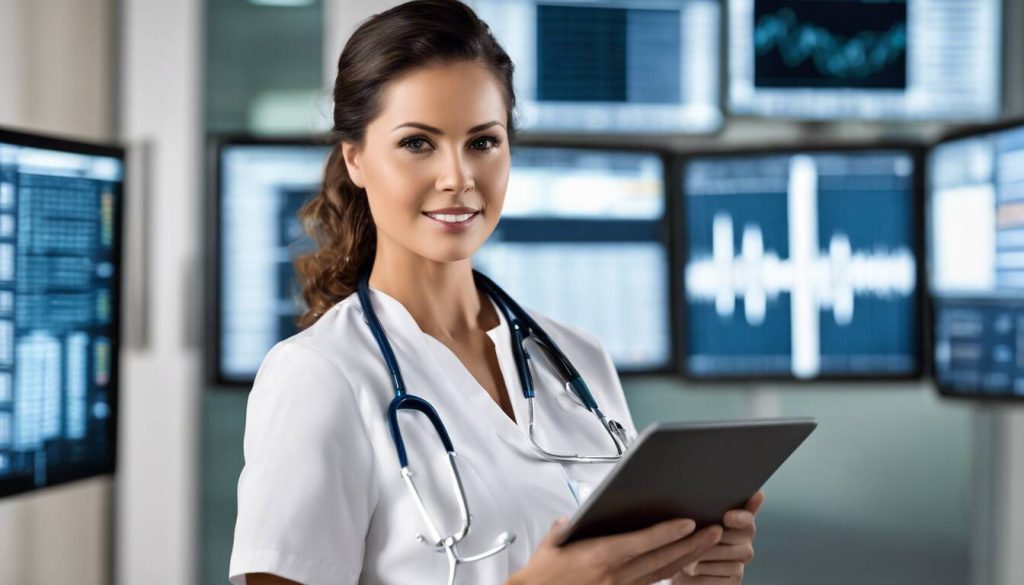
The Journey to Becoming a Nursing Informatics Specialist
The path to becoming a Nursing Informatics Specialist involves establishing a strong educational foundation and honing essential skills to flourish in this ever-evolving field. Typically, it begins with earning a bachelor’s degree in nursing, providing the fundamental understanding of patient care and hospital processes.
Upon completing the bachelor’s program, aspiring specialists must obtain a registered nurse (RN) license, marking the initial step into direct involvement in patient care. This licensure allows individuals to gain hands-on experience and a deep comprehension of the challenges and complexities associated with providing quality healthcare.
Subsequently, additional training or certification in nursing informatics plays a pivotal role in bridging the gap between nursing expertise and technology proficiency. This deeper dive into informatics equips individuals with the knowledge and skills required to effectively integrate data and technology into the healthcare environment. Pursuing advanced degrees such as a Master of Science in Nursing (MSN) or a master’s degree in health informatics further enhances one’s qualifications and positions them for leadership roles within the industry.
For those seeking to enhance their expertise, specialized programs like the Nursing Informatics Training and Education offered by institutions such as the University of Minnesota provide comprehensive education focused on strengthening leadership and training skills in nursing informatics. These programs emphasize the importance of leveraging technology to optimize patient care and healthcare delivery.
As the demand for nursing informatics specialists continues to grow, it is crucial for individuals aspiring to pursue this career path to invest in their education and skill development to meet the evolving demands of this exciting field.
With a solid foundation established, let’s now shift our focus to explore the diverse roles and responsibilities that await nursing informatics specialists in their dynamic professional landscape.
Diverse Roles and Responsibilities in Nursing Informatics
Nursing informatics specialists wear multiple hats, seamlessly integrating the realm of healthcare with the ever-evolving landscape of technology. Let’s start by delving into a few key responsibilities that define the dynamic role of these professionals.
Information Management
One of the primary responsibilities of nursing informatics specialists is to ensure effective information management. They are tasked with implementing and maintaining data-related processes within healthcare settings. This includes maintaining accurate records of patient information, treatment plans, and medical history, all while ensuring strict data security measures are in place to protect sensitive patient data from unauthorized access or breaches.
Additionally, as healthcare facilities transition towards electronic health records (EHR) and electronic medical records (EMR) systems, nursing informatics specialists play a pivotal role in overseeing the seamless integration and maintenance of these systems. By actively managing and optimizing these technological systems, they enable healthcare providers to efficiently access vital patient information and streamline care processes.
Communication and Training
In addition to information management, nursing informatics specialists act as key agents in fostering effective communication and staff training within healthcare organizations. They take on the crucial responsibility of educating healthcare professionals on new technologies, processes, and best practices. By organizing training sessions and workshops, they empower healthcare staff to leverage technology effectively in their day-to-day operations, driving enhanced collaboration between various healthcare departments.
Moreover, their role extends beyond mere instruction; nursing informatics specialists also champion seamless communication practices within healthcare environments. By serving as intermediaries between clinical staff and IT teams, they facilitate effective collaboration, ensuring that the technological solutions implemented align with the specific needs of healthcare professionals. This collaborative approach drives efficient adoption and utilization of advanced technologies across the organization, ultimately enhancing patient care outcomes.
Data Validation and Reporting
Validating and reporting patient data is a critical aspect of the responsibilities undertaken by nursing informatics specialists. They meticulously examine patient data to ensure its accuracy while identifying any discrepancies that could compromise decision-making processes or patient care delivery. By advocating for comprehensive data validation procedures, they instill confidence in the reliability and accuracy of information utilized by healthcare teams.
Moreover, nursing informatics specialists play a pivotal role in leveraging validated data to generate comprehensive reports that aid healthcare professionals in making informed decisions. These insightful reports offer valuable insights into patient care trends, resource allocation optimization, and quality improvement initiatives. By harnessing robust reporting capabilities, nursing informatics specialists contribute significantly to enhancing the overall quality of care within healthcare organizations.
In essence, the multifaceted responsibilities of nursing informatics specialists are pivotal in harnessing technology for better patient care outcomes. From managing critical information systems to fostering seamless communication practices and validating essential patient data—each responsibility contributes to advancing the intersection of healthcare and technology for improved clinical efficacy.
As we’ve seen, the dynamic role of nursing informatics specialists shapes the foundation for improved healthcare through technology integration. Now, let’s shift our focus to unraveling the requisite technological knowledge these professionals must possess for effective performance.
Requisite Technological Knowledge for Effective Performance
In today’s healthcare environment, technology plays a central role in improving patient care, and nursing informatics specialists are at the forefront of integrating this technology into their daily practices.
Proficiency in Electronic Health Record (EHR) and Electronic Medical Record (EMR) systems is essential for nursing informatics specialists. These systems serve as the backbone of patient data management, providing comprehensive and real-time information about a patient’s medical history, diagnoses, medications, treatment plans, and more. Each day, these specialists navigate these complex systems to ensure that data is accurately recorded, securely stored, and readily available when needed.
One of the core responsibilities of nursing informatics specialists is to optimize the utilization of these EHR and EMR systems for streamlined workflows and efficient data management.
“Making sure that all patient data is accurately captured and accessible is an essential part of ensuring high-quality patient care.”
For instance, proficiency in EHR systems allows nursing informatics nurses to efficiently document patient care interventions and outcomes, serving as a critical resource for healthcare providers to make informed decisions about patient care plans.
Furthermore, a solid command of these technological platforms enables nursing informatics specialists to collaborate with interdisciplinary teams by providing comprehensive data insights. These insights are used to improve care coordination, enhance clinical decision-making processes, and drive evidence-based practice across healthcare settings.
Key Skills for Nursing Informatics Specialists:
| Skill | Importance |
|---|---|
| Proficiency in EHR/EMR | Essential for patient data management |
| Knowledge of Clinical Decision Support Systems (CDSS) | Enhances clinical decision-making |
| Familiarity with Health Information Exchange (HIE) platforms | Ensures secure sharing of patient information |
| Competence in Telehealth and Telemedicine technologies | Enables remote patient care |
| Understanding of Data Analytics and Reporting Tools | Provides insights from healthcare data |
By mastering these essential technological skills, nursing informatics specialists can effectively harness the power of these systems to transform patient care delivery and positively impact healthcare outcomes.
Having laid the groundwork regarding the role of technology in nursing informatics, let’s now turn our attention to nurturing communication skills and mastery of electronic health records.
Nurturing Communication Skills and Mastery of Electronic Health Records
Effective communication is essential for success in any field, but it holds particular significance in the nursing informatics domain. Here, it involves conveying complex technical information to colleagues and staff who may not be as tech-savvy. Clear, concise communication bridges the gap between healthcare professionals and technology experts, ensuring seamless coordination and effective implementation of digital health solutions.
A Nursing Informatics Nurse is like a librarian for an Electronic Health Record (EHR) system—a keeper of valuable patient information. They are responsible for managing this vast digital library, ensuring easy access and accurate interpretation of its contents.
When a nurse logs onto the EHR system, they enter new patient data or retrieve existing records. Proficiency in navigating the system with precision and accuracy is crucial, as inaccurate data can lead to serious consequences for patient care.
In addition to data entry proficiency, nursing informatics specialists must also excel in data retrieval and analysis. Picture a situation where a doctor needs a patient’s history for quick decision-making during a critical moment. The nursing informatics nurse must swiftly locate and present the necessary information from the EHR system.
To illustrate this expertise, it’s analogous to being a conductor of an orchestra. The ability to coordinate various instruments (data points) to produce harmonious music (valuable insights) requires meticulous attention to detail and profound understanding of each component.
Moreover, the ability to gather insights from patient data is pivotal for improving healthcare outcomes. Through their mastery of EHR systems, nursing informatics nurses can identify patterns that help in predicting and preventing adverse events, optimizing treatment plans, and enhancing overall patient care.
Nursing informatics nurses play a pivotal role in leveraging technology to enhance patient care through clear communication and adept management of Electronic Health Record systems. Their proficiency in these areas contributes to the delivery of efficient and effective healthcare services.
Now that we’ve explored the critical role of nursing informatics nurses in harnessing technology for better patient care, let’s delve into specialized courses designed to enhance expertise in this dynamic field.
Enhancing Expertise: Specialized Courses in the Field
Specialized courses in nursing informatics take professionals deeper into the intricacies of healthcare technology, offering a comprehensive understanding of various critical facets of patient care. They are akin to adding more advanced tools to your professional kit. Let’s dive into some key aspects of these specialized courses.
Key Aspects
- Data Analytics: These courses cover the analysis and interpretation of complex healthcare data. They equip nurses with the ability to use modern analytics tools to derive meaningful insights from patient information. This skill is invaluable for identifying trends, predicting outcomes, and making informed decisions for patient care.
- Healthcare Information Systems: Understanding how healthcare information systems function is essential for effective management and utilization. Specialized courses provide a deep dive into electronic health records (EHR) and electronic medical records (EMR) systems, ensuring that nursing informatics specialists are well-versed in leveraging these systems to enhance patient care.
Some may argue that specialized courses require significant time and financial investment. While this may be true, the long-term benefits outweigh the initial costs. The knowledge gained from these programs not only expands career opportunities but also elevates the quality of patient care provided by informatics nurses.
For example, consider a scenario where a nurse possesses detailed knowledge of information governance principles. In this case, they can ensure that healthcare data is properly managed, protected from unauthorized access, and used appropriately to improve patient outcomes. As healthcare data privacy regulations evolve, expertise in information governance becomes increasingly crucial.
Moreover, completion of specialized courses demonstrates a commitment to maintaining high professional standards and staying updated on the latest advancements in nursing informatics. This dedication contributes to fostering a culture of continuous learning and improvement within the healthcare industry as a whole.
By immersing themselves in these specialized courses, nursing informatics professionals gain an edge in effectively harnessing technology to drive meaningful and transformative changes in patient care and health systems.
The Upside: Perks of Being in Nursing Informatics
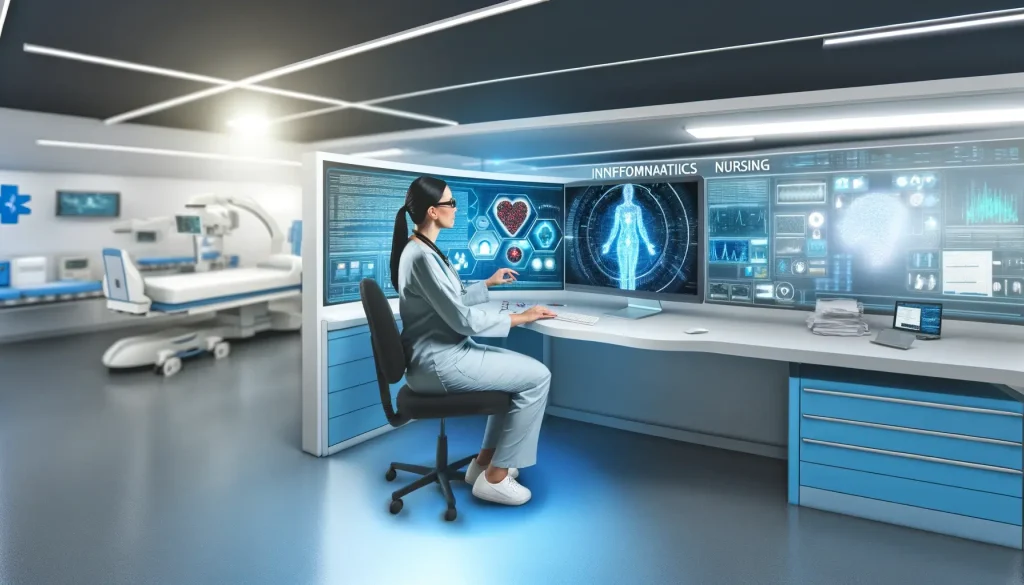
Nursing informatics offers rewards beyond the satisfaction of delivering better patient care. While it’s not just about the money, it’s undeniably enticing to know that nursing informatics specialists earn an average base pay of $121,713 per year. Moreover, this figure can increase based on experience, certifications, education level, and employer.
Beyond financial gain, this role offers a unique opportunity to blend patient care with data and technology. It allows for informed decision-making and drives significant improvements in patient care quality and outcomes. Imagine being at the forefront of transforming healthcare delivery through the integration of technology and information.
This blend of nursing expertise with technological innovation empowers nursing informatics specialists to play a crucial role in improving patient experiences and clinical outcomes. With the incorporation of electronic health records (EHR) and electronic medical records (EMR) systems, nurses have the power to optimize, collect, analyze data and implement evidence-based practices for better patient care.
For instance, you could be part of a team that introduces a new system that improves patient safety or streamlines how important health information is shared between healthcare providers. Even better, imagine playing a key role in implementing processes that significantly reduce medication errors or enhance hospital workflow efficiency – contributing to improved patient satisfaction scores.
The competitive salaries certainly sweeten the deal. But what truly sets this career apart is the invaluable impact you can make every day by fusing your nursing skills with powerful health information technologies, ultimately enhancing patient care while leading innovations in healthcare delivery.
As we look ahead to the field’s growth potential and what the future holds for nursing informatics, it becomes clear that opportunities in this domain are boundless.
Future Outlook and Growth Opportunities in Nursing Informatics
The future of nursing informatics is promising, with the American Medical Informatics Association estimating the addition of 70,000 nursing informatics roles. This growth is driven by the healthcare industry’s increasing embrace of technology and its emphasis on leveraging data management and analysis to enhance patient care.
As healthcare institutions adopt electronic health records (EHRs), telemedicine, wearable health technology, and other innovative tools, the need for experts who can integrate, manage, and optimize these systems will intensify. Nursing informatics specialists are well-positioned to play a pivotal role in ensuring that these technologies are seamlessly integrated into clinical workflows, contributing to more efficient and effective patient care delivery.
Moreover, the evolution of healthcare regulations and standards requires adept professionals who can navigate the complex landscape of data privacy, security, and interoperability within electronic health systems. Nursing informatics specialists are uniquely equipped to address these challenges by implementing protocols and safeguards to protect sensitive patient information while facilitating seamless communication between different healthcare platforms.
In addition to the demand for expertise in current technology, the progressive nature of the healthcare industry ensures that nursing informatics professionals will be at the forefront of emerging trends such as artificial intelligence, machine learning, predictive analytics, and personalized medicine. This opens up abundant opportunities for those in the field to contribute to cutting-edge research and innovation, ultimately shaping the future of healthcare delivery.
Consider the potential impact: nursing informatics specialists could harness data-driven insights to develop personalized treatment plans for patients based on their genetic profiles, lifestyle factors, and real-time health data from wearable devices. By leveraging advanced analytics, they can identify trends in population health and devise preventive strategies to mitigate the onset of chronic diseases within communities.
Furthermore, the integration of informatics principles into nursing education curricula is fostering a new generation of nurses who possess foundational knowledge in health information systems and data analysis. This convergence of traditional nursing expertise with informatics competencies not only broadens career pathways for aspiring nurses but also reinforces the expanding influence of informatics on improving patient outcomes at all levels of care delivery.
Considering these factors, it’s evident that nursing informatics presents a dynamic and compelling landscape for professionals seeking a career that combines technological expertise with a profound impact on patient care. As technology continues to shape the future of healthcare, nursing informatics stands at the intersection of innovation and compassionate practice, offering unparalleled opportunities for growth and advancement.
The intersection of technology and patient care presents a wealth of opportunities for those in the nursing informatics field – a promising blend of innovative solutions and meaningful impact.