
Military Nurse: A Rewarding Healthcare Career in the Armed Forces
Being a military nurse is more than just a job—it’s serving others while wearing the proud uniform of your nation. These healthcare warriors contribute significantly by attending to wounded soldiers in environments that are often as harsh as they are unpredictable. However, the challenges don’t overshadow the gratification – aiding fellow servicemen and women often brings about an unmatched sense of fulfillment. Furthermore, there’s ample room for growth with various specialties to explore and escalating ranks that bring increased responsibility and recognition. Explore on, future healthcare hero.
Military nurses play a crucial role in providing medical care to members of the military and their families, often in active war zones. Their responsibilities include employing critical thinking skills, managing emergencies, and maintaining a sense of calm in high-pressure situations.
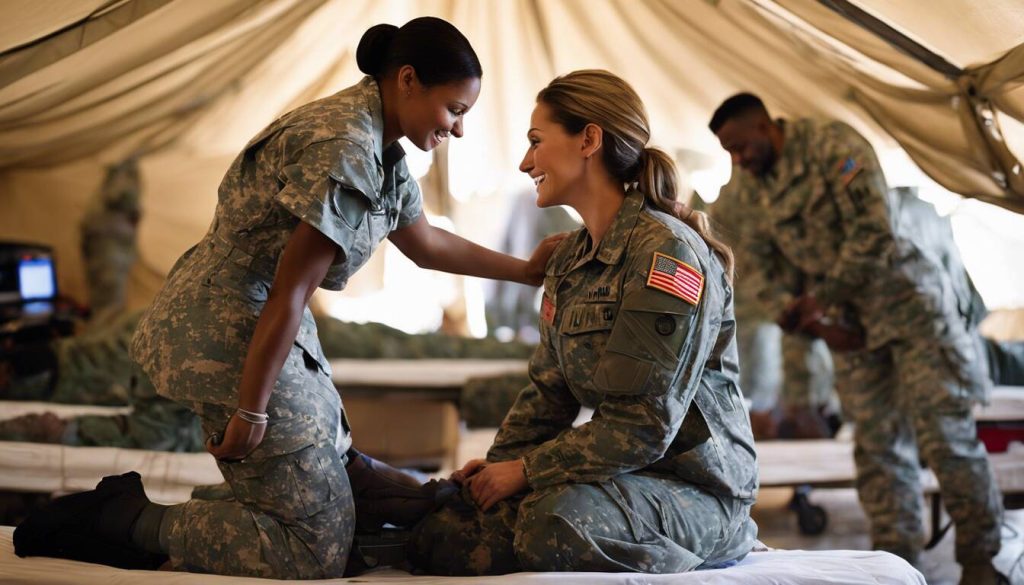
The Demanding Role of a Military Nurse
Imagine this: You’re in the thick of a military operation, the sound of gunfire and distant explosions hanging heavy in the air. In the midst of it all, you’re responsible for providing medical care to service members in some of the most intense and dangerous situations. This is just one scenario that military nurses regularly face, highlighting the demanding nature of their critical role.
Military nurses are not only skilled in nursing; they are also trained to function effectively in high-stress environments such as active war zones or areas affected by natural disasters. Their responsibilities encompass much more than standard medical care; they need to be prepared to handle emergencies, manage triage, and even provide care in challenging, austere conditions. Critical thinking and quick decision-making skills are crucial for military nurses. They must be adept at assessing and managing medical emergencies with limited resources. Their adaptability and ability to remain calm under pressure are fundamental traits that allow them to operate effectively even in unpredictable and rapidly changing situations.
Take, for instance, a marine unit out on deployment in a remote area. When a soldier sustains an injury and needs immediate medical attention, it’s the military nurse who leaps into action, working swiftly to provide life-saving aid while navigating through harsh conditions with limited equipment. Now, think about the complexities involved in providing medical care during combat situations. Wound care becomes a pivotal aspect of their duty—treating injuries ranging from minor wounds to severe trauma sustained during combat operations. The ability to quickly assess and treat these injuries can mean the difference between life and death for a service member.
In many ways, military nurses embody the adaptability and resourcefulness of MacGyver, often finding themselves in extreme situations where improvisation and quick thinking are necessary for success.
The challenging nature of the role becomes evident when considering the array of duties and responsibilities that military nurses shoulder. Their dedication and unwavering commitment to providing top-notch medical care under pressure truly make them unsung heroes on the battlefield.
With a deep understanding of the demanding and high-stakes environment that military nurses operate in, it’s now essential to explore the diverse specialties available to these dedicated professionals within the field of military nursing. Let’s uncover how their careers can progress and specialize in various niche areas, each bringing its own unique set of challenges and rewards.
Specialties and Career Advancement in Military Nursing
Once experienced as a military nurse, you might naturally gravitate towards specific areas of care. Pediatric care, oncology, and emergency nursing are some of the specialties open to you. Whether drawn to working with young patients or driven by the desire to assist individuals battling cancer, specializing in a particular area allows for tailored care and the development of valued expertise within the military healthcare system.
Opportunities for Specialization
Pursuing a specialty not only makes you an expert in that field but also opens doors to a more diversified career path over time, advancing your standing within the ranks and providing added responsibilities and leadership roles. This richer career path offers opportunities to guide and train other nurses while furthering your own knowledge base.
Continuous Education and Training
The military emphasizes continuous education and training for its healthcare providers. This focus ensures that nurses evolve alongside advancements in medical technology and practices. Educational opportunities help maintain high-quality care, keep nurses updated with the latest procedures and treatments, and support personal growth that enhances patient care.
Advancement Prospects
As experience and expertise grow within your chosen specialty, expect advancement through the ranks, with each step offering greater responsibility. Higher levels may include leading an entire medical department or training colleagues in your specialized field, earning respect from peers and valuable leadership experience.
Tailored Care for Patients
Specializing in military nursing enables forming long-term connections with patients. The trust in both the care provided and specific expertise contributes to ensuring each service member receives tailored treatment, significantly enhancing their overall well-being.
By specializing in the dynamic landscape of military nursing, not only can your skills deepen, but so can your possibilities for personal and professional growth.
Qualifications Needed to Become a Military Nurse
Becoming a military nurse involves meeting a specific set of qualifications and skills beyond providing medical care. The foundational requirement is being a licensed registered nurse with a Bachelor of Science in Nursing (BSN), providing the essential knowledge and skills for the field.
In addition to being a licensed RN with a BSN, aspiring military nurses must undergo tailored additional training courses on emergency medical procedures, operational healthcare practices, and the specific protocols and regulations governing medical care within the armed forces. This specialized training is crucial for effectively adapting to the unique challenges and environments encountered in military settings.
Moreover, physical fitness tests are integral to the qualification process for military nurses. As members of the armed forces, military nurses are expected to maintain robust physical readiness to perform their duties effectively, meeting specific fitness standards set by the respective branches of the military.
For instance, the Army, Navy, and Air Force each have their own unique requirements for physical fitness tests that encompass cardiovascular endurance, muscular strength, and overall physical agility.
Fulfilling these requirements establishes a solid foundation for individuals aspiring to embark on an impactful career as a military nurse, where they can contribute significantly to the well-being of service members and their families.
Essential Skills for the Military Nurse
Military nurses encounter distinct challenges that demand a specific set of skills, beyond standard nursing competencies. While clinical expertise is vital, it is equally crucial for military nurses to possess non-technical skills that empower them to excel in their roles.
First and foremost, adaptability is key. The ability to adjust quickly to new situations and environments, whether transitioning from working at a base hospital to being deployed in an active war zone or adapting to different cultural norms and practices, is imperative for military nurses.
Moreover, effective communication is vital not only within the healthcare team but also when interacting with service members, veterans, and families from diverse backgrounds. Clear and concise communication can often be the difference between life and death in critical situations.
Another critical skill is resilience. Military nurses are frequently exposed to traumatic events and high-stress situations, so resilience is paramount for maintaining mental and emotional well-being.
For instance, military nurses often work in highly dynamic environments where quick decision-making is essential. In emergency medical situations or on the battlefield, split-second decisions can have a significant impact on patient outcomes.
Compassion and empathy are fundamental attributes for providing care in challenging circumstances. Whether it’s offering emotional support to wounded soldiers or tending to civilians in conflict zones, the ability to empathize with patients and their families is central to delivering holistic care.
Cultural competence is another essential skill for military nurses. They must be sensitive to the cultural practices and beliefs of individuals they provide care for, especially when deployed in diverse global settings.
In summary, military nursing demands a unique skill set that extends beyond clinical expertise. The ability to adapt, communicate effectively, remain resilient, make swift decisions, showcase empathy, and demonstrate cultural competence are integral parts of the toolkit for any aspiring military nurse.
As we delve into the next segment, we’ll explore the demanding yet deeply fulfilling lifestyle of a military nurse and the associated challenges they bravely navigate.
Lifestyle and Challenges of a Military Nurse
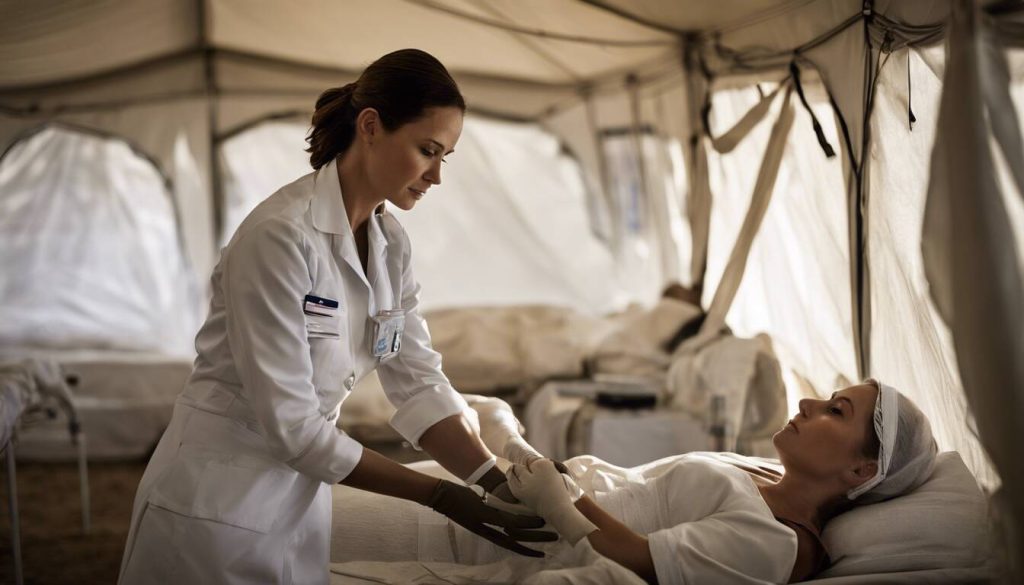
Military nursing transcends the realm of mere profession; it’s an all-encompassing way of life. Adaptability is a crucial skill for these medical professionals, as they face frequent relocations to different bases and the potential for deployment to various global locations, making their lifestyle markedly different from that of civilian nurses. The nomadic nature of their work can render the task of building long-term personal and professional relationships challenging.
Imagine having to bid farewell to friends, family, and familiar surroundings every few years as your duty station changes. This level of transience can be both emotionally and logistically taxing.
“I’ve been stationed at three different bases in the last five years. It’s not easy leaving friends behind each time, but that’s just part of the deal with being a military nurse,” shares Lieutenant Carla Stevens, a registered nurse in the Army.
Moreover, facing potential deployment to dangerous and unfamiliar locations adds an element of unpredictability that civilian nurses do not generally encounter in their careers. Military nurses may find themselves in high-stress environments, facing extended periods away from family and exposure to traumatic situations.
Deployments can last from several months to a year or more, making it hard for military nurses to maintain consistent contact with their loved ones back home. Such circumstances require resilience and emotional fortitude, highlighting the unique challenges faced by military nurses.
Consider the words of Captain James Lee, who works as a military nurse in the Air Force: “My deployment experiences have given me a newfound appreciation for the small moments with my family. While I wouldn’t trade my training and experiences for anything, it’s tough being away for such extended periods.”
In addition to frequent relocations and potential deployments, military nurses are also confronted with additional stressors specific to their roles. These challenges demand fortitude and unwavering commitment, painting a vivid picture of the intrepid nature of their work.
As we’ve explored the distinctive demands and tribulations faced by military nurses, it becomes paramount to delineate the array of benefits that accompany such an austere yet noble vocation.
Benefits of Being a Military Nurse
Being a military nurse offers numerous tangible and intangible benefits. An essential advantage is the opportunity for continuous learning and professional growth. In the armed forces, nurses have access to cutting-edge medical technology and advanced training programs that are often not available in civilian healthcare facilities. By constantly upgrading their skills and knowledge, military nurses are better equipped to handle complex medical situations and provide top-notch care to their patients, keeping them at the forefront of medical care advancements.
Moreover, career advancement is another notable benefit of serving as a military nurse. The structured nature of the military allows nurses to progress through the ranks, taking on roles with increased responsibility and leadership opportunities, contributing to personal and professional development while fulfilling the greater mission.
Comprehensive Benefits Package
In addition to the professional advantages, military nursing offers a robust benefits package, including retirement plans, healthcare coverage, loan repayment programs, and competitive pay—making it an attractive option for those seeking financial security and stability. These incentives contribute to a sense of job security and overall well-being, allowing military nurses to focus on their duties without being burdened by economic concerns.
Diverse Opportunities
One exciting aspect of being a military nurse is the opportunity to travel to diverse locations around the world. Military assignments can take nurses to different bases, hospitals, or even international locations, providing them with exposure to varied cultures and healthcare practices—a unique chance for personal growth and a broader understanding of global healthcare needs.
Loan Repayment Programs
Furthermore, many military branches offer loan repayment programs as part of their benefits package. This initiative assists nurses in alleviating educational debts, reducing financial stress, and enabling them to focus on their professional responsibilities without being encumbered by hefty student loans.
In summary, the benefits of being a military nurse extend far beyond just financial compensation. From career advancement opportunities and comprehensive benefits packages to exposure to diverse cultures and cutting-edge medical technologies, serving as a military nurse offers a fulfilling career path filled with lifelong rewards.
Evaluating if Military Nursing is Right for You
Deciding to become a military nurse involves more than just the desire to help others—it also means preparing for a unique and challenging role. Military nursing offers rewards but also comes with its own set of demands that can significantly impact your life and well-being. It’s essential to carefully weigh the challenges and benefits before entering this esteemed profession.
Commitment to the Demanding Nature of the Role As a military nurse, you’ll be responsible for providing healthcare services in various settings, including active war zones, army bases, aeromedical evacuation liaison teams, and naval nursing. This involves being prepared for disruptions to your personal life, irregular working hours, and possibly extended periods away from home. The demanding nature of the role requires a high level of resilience, adaptability, and dedication. It’s not only about the duties you’ll be performing; it’s also about understanding the critical importance of your role in ensuring the health and well-being of service members and their families. Your ability to provide medical care with precision under high-pressure situations is paramount.
Imagine being deployed overseas, often away from your family and friends for an extended period. Embracing the unpredictability of military life while maintaining composure and providing excellent medical care is part and parcel of serving as a military nurse.
Lifestyle Adjustments Required Military nurses face lifestyle adjustments that civilian nurses may not encounter. They must be prepared for frequent moves due to changes in duty stations and deployments. This means adapting to new environments while maintaining their focus on delivering exceptional patient care. Military life can bring about a sense of adventure with opportunities to experience different cultures and locations. However, it also involves sacrifice, as bonds formed with colleagues are often put to the test when facing difficult situations in potentially dangerous or high-stress environments. Balancing the demands of military service with personal life is an ongoing challenge that requires flexibility and resilience. It’s about adjusting to change while staying committed to your duty as a healthcare professional.
As we delve deeper into assessing whether a career in military nursing aligns with one’s aspirations and personal values, it becomes evident that the decision carries significant weight and requires deep consideration.