
Nurse Ethicist: Advancing Ethical Practices in Healthcare
A nurse ethicist is a specially trained nurse who knows a lot about right and wrong in healthcare situations. They guide other medical workers when hard choices need to be made, reassuring that care given to patients aligns with what’s right and fair. Like a compass guiding sailors at sea, these nurses steer hospitals and clinics through complex moral issues, ensuring that everyone sails on the just path of care. So next time you see a hospital working smoothly, know that there’s an ethical anchor keeping things clear and balanced. Let’s learn more about them.
A nurse ethicist serves as an expert in ethical issues within the healthcare setting, offering guidance on complex ethical dilemmas, participating in ethics committees, and providing education and training to nurses and other healthcare professionals. They play a vital role in ensuring that patient care is aligned with ethical principles and standards.
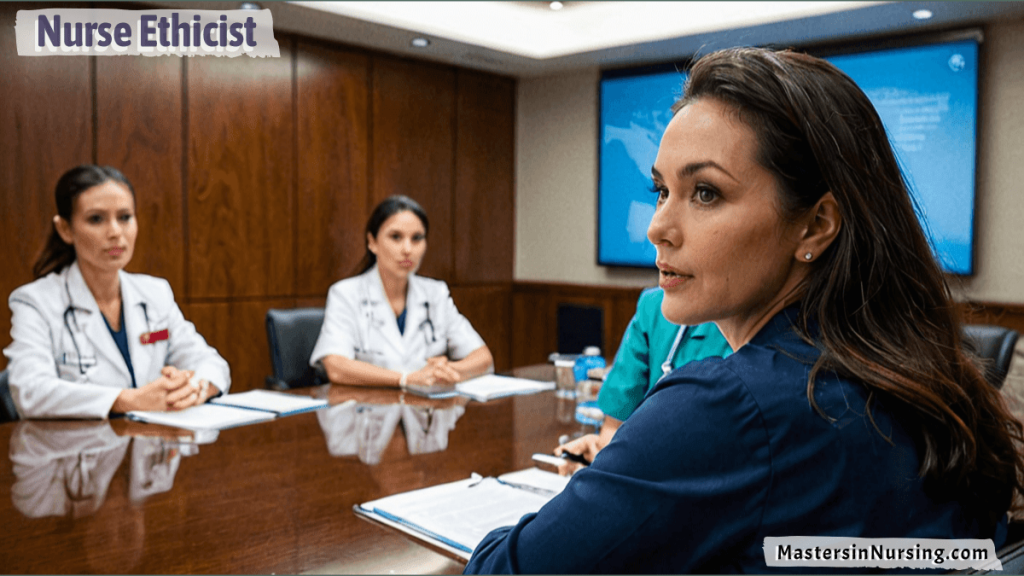
What is a Nurse Ethicist?
Imagine being in a hospital, surrounded by people caring for patients. Among these healthcare professionals, there may be someone you don’t always see or hear about – a nurse ethicist. But what exactly do they do?
A nurse ethicist is much more than just another nurse; they are like the moral compass of healthcare. They are registered nurses who not only have clinical expertise but also specific education and training in ethical theories and principles. This unique combination allows them to navigate complex ethical issues within the healthcare system.
For instance, picture yourself as a patient with strong beliefs about a certain treatment, but the healthcare team recommends something different. This is where a nurse ethicist comes in. They provide guidance and support in such delicate situations, ensuring that patient care remains aligned with ethical standards and best practices.
Nurse ethicists also work across interdisciplinary teams, collaborating with doctors, administrators, and other healthcare professionals to ensure that ethical considerations are at the forefront of decision-making processes.
Key responsibilities of a nurse ethicist include:
- Providing ethical guidance to healthcare professionals and organizations
- Advocating for patient rights and autonomy
- Assisting in policy development and review
- Contributing to clinical ethics consultations
So when you walk through those hospital doors, know that there’s someone working behind the scenes to ensure that every decision made is not just medically sound, but ethically robust as well.
As we zoom in on the core competencies of a nurse ethicist, we’ll uncover the intricate web of skills and knowledge that form their ethical armor.
Core Expertise of a Nurse Ethicist
Nurse ethicists are a diverse and talented group of professionals with a wide array of skills that guide their decision-making process in complex situations. Let’s delve into their core areas of expertise and the impact it has on healthcare ethics.
Ethical Theories
Ethical theories provide the framework upon which nurse ethicists base their professional judgment. They must have a comprehensive understanding of ethical theories such as deontology, which focuses on moral rules and duties; utilitarianism, centered around maximizing overall good outcomes; and virtue ethics, which emphasizes the development of positive character traits. These theories serve as a compass, guiding nurse ethicists through intricate moral landscapes and helping them make sound ethical decisions. Understanding these theories allows nurse ethicists to consider various perspectives when navigating complex ethical dilemmas, ultimately aiding them in providing well-rounded ethical recommendations that align with patient-centered care.
Moral Reasoning
Another critical aspect of a nurse ethicist’s expertise lies in their advanced skills in moral reasoning and ethical analysis. Their ability to navigate intricate ethical dilemmas is rooted in their capacity for robust moral reasoning, allowing them to evaluate conflicting values, rights, and obligations inherent in complex healthcare scenarios. Ethical analysis requires nurse ethicists to carefully weigh the potential consequences of various actions, providing them with the capability to craft ethically sound resolutions to challenging ethical predicaments. This enables them to offer valuable guidance, ensuring that patient welfare and autonomy remain at the forefront of every ethical decision made within healthcare settings.
Legal and Regulatory Compliance
Nurse ethicists also possess a deep understanding of legal and regulatory frameworks in the healthcare industry. By staying informed about the ever-evolving legal requirements and industry standards, they ensure that ethical decisions remain compliant with established laws and regulations. This multifaceted expertise allows nurse ethicists to chart a course aligned with legal boundaries while adhering to rigorous industry norms. Their ability to seamlessly integrate ethical considerations with legal parameters ensures that patient rights are protected, and professional conduct remains within the bounds of existing legal frameworks.
Clearly, nurse ethicists draw from a diverse skill set encompassing both theoretical knowledge and practical application, enabling them to effectively navigate complex ethical challenges while upholding the highest standards of patient-centered care.
As we continue our exploration of the pivotal role of nurse ethicists in healthcare, let’s examine their significant impact on policy development within medical institutions.
Role of Nurse Ethicists in Policy Development

Nurse ethicists play a pivotal role in shaping the ethical frameworks that guide healthcare delivery. Their involvement in policy development ensures that ethical considerations are thoroughly integrated into all aspects of patient care. Essentially, they act as champions for patient-centered care and ethical decision-making, guaranteeing that the rights and well-being of patients remain at the forefront of healthcare policies.
Ethical Analysis and Recommendations
Nurse ethicists contribute to policy development by providing ethical analysis and recommendations based on established ethical frameworks. They utilize theoretical models such as the principlist approach, virtue ethics, and deontological ethics to guide their policy recommendations. Through extensive ethical analysis, nurse ethicists identify potential ethical dilemmas and provide valuable insights to policymakers on how these can be addressed within healthcare policies.
Patient-Centered Care Advocacy
One of the primary goals of nurse ethicists in policy development is to ensure that healthcare policies align with ethical principles and prioritize patient well-being. Their input helps in addressing ethical dilemmas, ensuring fair allocation of resources, and promoting patient autonomy within healthcare policies. By advocating for patient-centered care, nurse ethicists strive to create an environment where patients’ rights and choices are respected and upheld.
Facilitation of Ethical Discussions
Nurse ethicists facilitate essential discussions about ethical implications within healthcare policies. They engage with multidisciplinary teams and policymakers to explore the ethical dimensions of various healthcare practices, ensuring that all stakeholders have a deep understanding of the ethical implications of their decisions. This proactive engagement fosters a culture of ethical awareness and responsibility within healthcare institutions.
Integration of Ethical Considerations
Incorporating ethical considerations into healthcare policies requires meticulous attention to detail, and this is where nurse ethicists excel. They work diligently to ensure that policies are not only aligned with established ethical principles but also reflect the diverse needs and values of patients and healthcare professionals. By integrating these considerations, nurse ethicists contribute to the creation of robust and ethically sound healthcare policies.
The active participation of nurse ethicists in policy development serves as a cornerstone in upholding the integrity of healthcare systems while promoting the highest standards of ethical practice.
Ethical Consultation in Healthcare
In the complex and emotionally charged field of healthcare, ethical issues can arise that challenge even the most experienced professionals. This is where nurse ethicists play a pivotal role as consultants, offering vital guidance and advice to healthcare teams when they encounter ethically complex situations. Much like a trusted map, they assist in navigating the morally intricate pathways of patient care to ensure that the decisions made uphold professional ethics and prioritize patient well-being.
Analyzing Ethical Issues
Imagine a situation where a patient’s family disagrees on the treatment options proposed by the healthcare team. In such instances, nurse ethicists step in to break down the ethical dimensions of the issue. They carefully examine each aspect to understand the potential impact on the patient, their loved ones, and the healthcare team. By conducting this thorough analysis, nurse ethicists provide valuable insight into how different courses of action might unfold and affect all involved parties.
Exploring Alternative Courses of Action
As seasoned navigators amidst turbulent ethical waters, nurse ethicists are skilled at exploring alternative courses of action. They work with healthcare teams to identify different approaches that address ethical concerns while ensuring high-quality care for patients. This could involve understanding the patient’s wishes more clearly, investigating additional treatment options, or facilitating communication between stakeholders to reach a consensus that aligns with professional ethics and respects patient autonomy.
Identifying Ethically Sound Decisions
One of the key responsibilities of nurse ethicists during ethical consultation is to identify the most ethically sound decisions. They draw upon their expertise and trained judgment to carefully weigh the potential consequences of each option. Through this process, they help healthcare teams choose paths that honor ethical principles while safeguarding the well-being and rights of every individual involved. This careful consideration plays a crucial role in upholding trust in healthcare institutions and ensuring that patients receive the highest standard of care.
With their ability to analyze complex issues, explore alternative possibilities, and identify ethically sound decisions, nurse ethicists serve as invaluable consultants, guiding healthcare teams through challenging ethical terrain, shaping an environment conducive to optimal patient care.
Nurse Ethicist in Conflict Resolution
When it comes to conflict resolution, nurse ethicists are like the peacekeepers of the healthcare world. They’re highly skilled at mediating conflicts that arise due to ethical concerns and promoting open dialogue among healthcare professionals. Imagine this: A healthcare team is at odds over an ethical decision, tensions are running high, and emotions are flaring up – a nurse ethicist steps in to help everyone see eye to eye by facilitating constructive conversations based on ethical principles.
Mediation and Facilitation: This is where nurse ethicists shine. They have the expertise to facilitate discussions that lead to mutually agreed-upon resolutions. They act as a bridge and help foster understanding between different parties who might have conflicting viewpoints. Their ultimate goal is to guide the team towards a decision that aligns with ethical principles, all while ensuring that everyone’s concerns are taken into account.
Consider a situation where a healthcare team is divided over whether to proceed with a risky medical procedure for a patient with limited capacity to make decisions. Emotions may run high as some team members advocate for doing everything possible to save the patient, while others advocate for respecting the patient’s autonomy. In such scenarios, nurse ethicists use their specialized training to guide productive conversations that acknowledge the diverse perspectives and values within the team.
Team Collaboration: Nurse ethicists also play a vital role in collaborating with interdisciplinary teams. By fostering an environment of shared understanding and respect for differing viewpoints, nurse ethicists contribute to a cohesive approach to ethical decision-making. They emphasize the importance of each team member’s input and facilitate a process where ethical responsibilities are collectively understood and upheld.
Imagine an interdisciplinary care team consisting of physicians, nurses, social workers, and family members disagreeing on how to manage aggressive end-of-life care for a terminally ill patient. Nurse ethicists actively engage with all stakeholders, ensuring that each voice is heard, and eventually guide the group towards aligning their approach with ethical standards while accommodating various professional viewpoints.
As we explore further, we’ll uncover more about the significant impact of nurse ethicists in resolving complex conflicts and fostering collaborative ethical decision-making within healthcare settings. Let’s plunge deeper into the multifaceted responsibilities of these invaluable professionals.
Decision-Making in Ethically Challenging Situations
When it comes to healthcare, there are often instances when difficult decisions must be made, with potential far-reaching effects. This might include decisions on the best course of action for a patient unable to express their wishes or on fairly allocating limited resources. Nurse ethicists play a critical role in providing support and guidance to help healthcare professionals navigate complex ethical considerations.
One of the crucial roles of nurse ethicists is to assist in weighing the ethical implications of different choices. They work closely with healthcare teams by fostering a thoughtful and conscientious approach to patient care. This involves considering factors such as autonomy, beneficence, non-maleficence, and justice to ensure fair and equitable treatment.
Consider a scenario where a patient’s family requests extensive medical interventions, but the medical team believes that such measures may only prolong suffering without any real chance of recovery. Nurse ethicists would collaborate with healthcare professionals, engaging in discussions about the patient’s values and preferences, while also considering what is ethically permissible and appropriate within medical practice.
Additionally, nurse ethicists facilitate communication between all parties involved, ensuring that everyone’s perspectives and concerns are heard and acknowledged. This inclusive approach fosters an environment where all members of the healthcare team can actively participate in ethical decision-making processes.
By guiding healthcare professionals through these difficult ethical decisions, nurse ethicists ensure that patient care remains at the center of every choice made, upholding ethical principles that enhance the quality of care provided.
With a firm foundation in ethical practices established, let’s now explore how upholding professional responsibility and the code of conduct is essential in maintaining the integrity of healthcare services.
Upholding Professional Responsibility and Code of Conduct
As a nurse, one of your most important responsibilities is to provide the best possible care for your patients. But it’s not just about following medical procedures—ethics play a crucial role as well. This is where nurse ethicists step in, to ensure that professionals adhere to ethical standards in their interactions with patients, families, and colleagues. They are like ethical guides, helping everyone involved in healthcare navigate complex moral dilemmas and maintain the highest standards of professionalism.
Nurse ethicists are the gatekeepers of ethical behavior in healthcare settings. They don’t just preach ethics; they live it every day. They promote ethical awareness, encourage ethical reflection, and guide healthcare professionals in making decisions that align with the highest ethical standards. By doing so, they help create an environment where everyone feels safe and respected, which in turn means better care for patients and a more positive work atmosphere for staff.
Consider this scenario: A nurse ethicist may be consulted when a difficult decision needs to be made about end-of-life care for a patient. This is an emotionally charged situation for all involved—the patient, their family, and the medical team. The nurse ethicist’s role here is to facilitate open, honest discussions, ensuring that each person’s values and beliefs are respected throughout the decision-making process.
Moreover, nurse ethicists provide guidance on complex issues such as patient autonomy, informed consent, resource allocation, and end-of-life care among others. With their expertise and experience, they play a key role in addressing challenging ethical dilemmas that arise within healthcare settings.
In summary, nurse ethicists are like ethical compasses in healthcare settings, guiding professionals to uphold ethical codes of conduct and ensure the best possible care for patients while maintaining a respectful and supportive work environment for all involved.
The invaluable contributions of nurse ethicists are an integral part of upholding ethical standards and fostering a compassionate and professional healthcare environment.