
Certified Nurse Midwife (CNM): Labor and Delivery Expertise
With a perfect blend of medical prowess and emotional support, their role goes far beyond simply delivering babies. In the ever-evolving landscape of healthcare, one profession stands pivotal – Certified Nurse Midwives (CNMs). Possessing a unique approach to labor and delivery expertise, they are the unsung heroes of modern childbirth. Read on as we delve deeper into the vital world of CNMs, explore their exceptional contribution to the childbirth process, and understand why their specialized knowledge is indispensable in providing optimum care for mothers and newborns alike. Your journey into understanding how CNMs shape our tomorrow starts now!
Certified Nurse Midwives (CNMs) are advanced practice registered nurses who provide comprehensive care to pregnant women from labor to delivery to postpartum care. They also offer general healthcare services for women. CNMs can work in various settings such as hospitals, clinics, private practices, birthing centers, and even assist with home births. Their responsibilities include prenatal and postpartum care for pregnant women and newborns, as well as providing general healthcare for women throughout their lives.
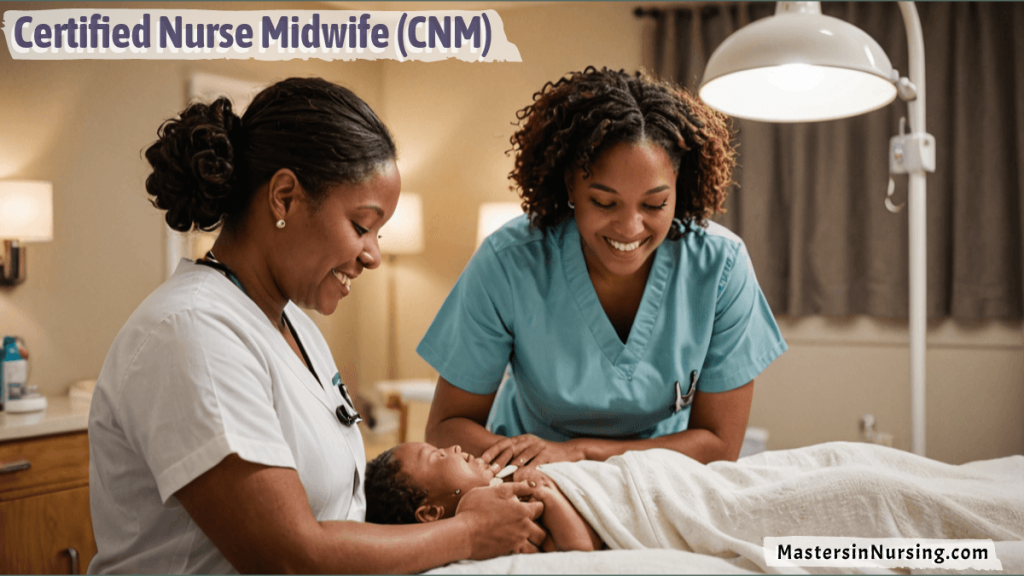
What is a Certified Nurse Midwife?
A Certified Nurse Midwife (CNM) is an advanced practice registered nurse who offers comprehensive care to pregnant women throughout the entire maternity process. CNMs possess specialized skills and knowledge in providing care during labor, delivery, and postpartum periods, making them valuable experts in the field of obstetrics.
To become a CNM, individuals must follow a specific path. First, they need to become a registered nurse by completing the necessary education and obtaining licensure. Once this step is accomplished, aspiring CNMs can apply to accredited nurse-midwifery programs. These programs offer focused training on prenatal care, childbirth, and women’s health.
After successful completion of the program, candidates must pass the American Midwifery Certification Board (AMCB) Nurse-Midwifery/Midwifery examination. This examination assesses their understanding of midwifery principles and their ability to provide safe and competent care for women across the lifespan.
For instance, one reputable online CNM program is offered by Georgetown University, which provides a Master of Science in Nursing degree with a focus on Nurse-Midwifery/Women’s Health Nurse Practitioner (NM/WHNP). This program equips students with the knowledge and skills needed to succeed as competent and compassionate CNMs.
Upon passing the examination, individuals are eligible to apply for state licensure as CNMs and begin their careers in this specialized field of nursing. It’s worth noting that CNMs are slightly different from certified midwives (CMs) – while both provide similar care, CNMs start as registered nurses and graduate from a nurse-midwifery program, whereas CMs come from various healthcare-related backgrounds.
It doesn’t stop there. Continuing education is essential for all healthcare professionals, including CNMs. After completing initial certification requirements, CNMs must renew their certification every five years through continuing education. This ensures that they remain up-to-date with the latest evidence-based practices and maintain the highest standards of patient care.
Now that we have a clear understanding of what it means to be a Certified Nurse Midwife, let’s explore the specific roles and responsibilities they undertake in providing care during labor, delivery, and beyond.
- According to the American College of Nurse-Midwives, as of 2023, there are more than 12,000 CNMs providing care in all 50 U.S states.
- The U.S Bureau of Labor Statistics reports that the job outlook for nurse midwives will grow by 9% from 2020 to 2030, which is faster than the average for all occupations.
- A significant statistic shared by the National Center for Biotechnology Information reveals that CNMs attended approximately 9.1% of all births in the United States in 2018, and this number has likely grown over the years due to increasing demand for midwifery services.
Roles and Responsibilities of CNMs
CNMs play a pivotal role in ensuring safe and healthy pregnancies for women. Their scope of practice includes comprehensive care throughout the entire prenatal period, assisting with labor and delivery, providing postpartum care, and offering general healthcare for women across their lifespan.
During the prenatal period, CNMs conduct routine check-ups, monitor fetal development, order tests, and provide educational resources for expectant mothers. They serve as a source of support, answering questions and addressing concerns to help ensure a smooth pregnancy journey.
When it comes time for labor and delivery, CNMs are skilled in managing the entire process. They provide emotional support to mothers during this intense experience while continuously monitoring the progress of labor. CNMs can also administer pain medication if desired or employ natural pain relief techniques such as breathing exercises and hydrotherapy.
For instance, imagine Sarah, who is in labor and has chosen to work with a CNM. The CNM attentively listens to Sarah’s birth plan preferences and supports her throughout each contraction. She provides guidance on different positions for optimal comfort and encourages Sarah with affirmations of her strength. The CNM closely monitors both mother and baby’s well-being throughout labor, ensuring a safe delivery.
Following delivery, CNMs continue to provide postpartum care by monitoring healing progress, offering breastfeeding support, conducting physical exams for both mother and baby, and addressing any concerns or complications that may arise. Additionally, they provide contraceptive counseling to assist women in making informed decisions about family planning.
Being a CNM is like being a reliable guide, holding the hands of expectant mothers throughout their pregnancy journey. They provide expertise, compassion, and care to ensure both mother and baby have the best possible outcomes.
With their extensive knowledge and skills, it’s no wonder that CNMs can work in various settings, such as hospitals, clinics, private practices, birthing centers, and even assist with home births. Now that we understand the roles and responsibilities of CNMs, let’s explore how they differ from regular nurses in their scope of practice and level of expertise.
- Certified Nurse-Midwives (CNMs) play a crucial role in providing comprehensive care for women throughout the entire prenatal period, labor and delivery, postpartum care, and general healthcare. They conduct routine check-ups, monitor fetal development, provide emotional support during labor, administer pain medication if desired, and offer postpartum care including breastfeeding support. CNMs act as reliable guides, holding the hands of expectant mothers throughout their pregnancy journey and ensuring the best possible outcomes for both mother and baby. They can work in various settings, including hospitals, clinics, private practices, birthing centers, and even assist with home births. CNMs possess extensive knowledge and skills that differentiate them from regular nurses in terms of scope of practice and expertise.
CNMs vs Regular Nurses
Certified Nurse Midwives (CNMs) and regular nurses may both work in healthcare settings, but their roles and responsibilities differ significantly. While both play crucial roles in patient care, CNMs specialize in providing comprehensive reproductive healthcare to women, focusing primarily on prenatal, labor, and postpartum care. In contrast, regular nurses have a broader scope of practice that encompasses various medical fields.
Consider the following scenario: A pregnant woman arrives at a hospital in the early stages of labor. She is looking for a skilled healthcare professional with expertise in delivering babies. In this situation, a CNM would be the ideal choice due to their specialized training. CNMs are qualified to guide women throughout the entire childbirth process, administering prenatal checkups, assisting during labor and delivery, and providing postpartum care.
Though regular nurses possess valuable skills and provide essential support during labor and delivery, they typically work under the supervision of obstetricians or CNMs themselves. Their duties may include monitoring vital signs, administering medications as prescribed, and offering emotional support to patients.
It’s important to note that while some regular nurses may have experience in labor and delivery units, they do not possess the same level of expertise that CNMs bring to the table. CNMs undergo advanced education and clinical training specific to midwifery care, enabling them to offer specialized services and comprehensive care throughout a woman’s childbirth journey.
Now that we understand the distinction between CNMs and regular nurses when it comes to labor and delivery expertise let’s explore the steps required to become a Certified Nurse Midwife.
Steps to Become a Certified Nurse Midwife
Becoming a Certified Nurse Midwife requires dedication, education, and practical experience. Here is an overview of the essential steps involved:
- Obtain a Bachelor of Science in Nursing: The first step toward becoming a CNM is earning a bachelor’s degree in nursing (BSN) from an accredited institution. During their undergraduate studies, aspiring CNMs gain foundational knowledge in anatomy, physiology, pharmacology, and other relevant subjects.
- Obtain Registered Nurse (RN) Licensure: After completing their BSN program, individuals must pass the National Council Licensure Examination for Registered Nurses (NCLEX-RN) to obtain licensure as a registered nurse (RN). RN licensure is a prerequisite for pursuing advanced practice nursing roles such as becoming a CNM.
- Gain Clinical Experience: Many CNM programs require applicants to have some clinical experience as an RN before admission. This allows individuals to develop essential skills and become familiar with the healthcare environment.
- Pursue a Master’s Degree in Nursing with a Focus on Midwifery: To become a Certified Nurse Midwife, one must complete a master’s degree program in nursing with a specialization in midwifery. These programs provide comprehensive education and training in midwifery care, reproductive health, antepartum care, intrapartum care, postpartum care, and newborn care.
- Complete Clinical Hours: As part of their master’s program, aspiring CNMs must fulfill a designated number of clinical hours under the supervision of experienced preceptors. This hands-on experience allows them to apply theoretical knowledge to real-life situations and gain proficiency in providing midwifery care.
- Pass Certification Exam: After completing the educational requirements and clinical hours, graduates are eligible to take the national certification exam administered by the American Midwifery Certification Board (AMCB). Successful completion of this exam leads to certification as a Certified Nurse Midwife.
- Obtain State Licensure: Once certified as a CNM by the AMCB, individuals must obtain state licensure to practice legally as a midwife. The specific requirements for state licensure can vary, so it’s crucial to research and fulfill the necessary obligations in the state where one intends to practice.
With these steps completed, individuals are well on their way to embarking on a rewarding career as a Certified Nurse Midwife.
Education and Training Requirements
Becoming a Certified Nurse Midwife (CNM) requires a solid foundation of education and training. To embark on this fulfilling career path, individuals must first become registered nurses (RNs) by completing an accredited nursing program, which typically takes around two to four years to complete. This lays the groundwork for future specialized training in midwifery.
After becoming an RN, aspiring CNMs can then apply for an accredited nurse-midwifery program. These programs are offered at both the master’s and doctoral levels, allowing individuals to choose the level of education that aligns with their career goals. The coursework in these programs focuses on a variety of areas including reproductive health, family planning, pregnancy care, labor and delivery management, postpartum care, and newborn care.
In addition to classroom education, aspiring CNMs engage in clinical rotations where they gain hands-on experience under the guidance of experienced midwives or healthcare professionals specializing in women’s health. These clinical experiences allow them to develop the necessary skills in providing comprehensive care to pregnant women from prenatal visits through labor and delivery to postpartum care.
For example, during their training, CNM students might observe and assist with prenatal examinations, learn techniques for managing labor pain such as breathing exercises or relaxation techniques, and gain proficiency in conducting deliveries either in a hospital or birth center setting.
It’s worth mentioning that CNM programs often provide opportunities for specialization within the field. Some programs offer dual tracks that combine midwifery with other specialized areas such as women’s health nurse practitioner (WHNP), providing a broader scope of practice.
Now that we have explored the educational journey to become a CNM, let’s dive into the certification and licensure process that follows.
Certification and Licensure Process
Once completion of an accredited nurse-midwifery program is achieved, aspiring CNMs must take the American Midwifery Certification Board (AMCB) Nurse-Midwifery/Midwifery examination. This comprehensive exam assesses their knowledge and competence in various aspects of midwifery care. Successful completion of this examination is required to obtain certification as a CNM.
After passing the examination, individuals can then apply for state licensure. Each state has its own specific requirements for licensure, which may include additional documentation, background checks, and fees. It’s important to research and adhere to the licensing requirements of the state where one intends to practice as a CNM.
Once certified and licensed, CNMs must renew their certification every five years through continuing education. This ensures that they stay updated on the latest advancements and best practices in midwifery care.
For instance, CNMs might attend conferences, workshops, or complete online courses focused on topics such as maternal-fetal health, neonatal care, or evidence-based practices in midwifery.
The certification and licensure process sets a standard in the profession by ensuring that CNMs possess the necessary knowledge and skills to provide safe and effective care to women during pregnancy, childbirth, and beyond.
Working Environments for CNMs
As certified nurse-midwives (CNMs), these skilled professionals possess a versatile set of skills that allows them to work in various healthcare settings. From hospitals to clinics and even home births, CNMs have the expertise to provide care during all stages of pregnancy, delivery, and postpartum. Let’s explore the different working environments where CNMs can make a significant impact.
Hospitals
Hospitals serve as one of the primary settings where CNMs practice their expertise. Working in collaboration with physicians, obstetricians, and other healthcare professionals, CNMs play a vital role in providing comprehensive care to women during labor and delivery. In such an environment, they have access to advanced medical technology and resources that ensure the safety and well-being of both mother and baby. This setting is particularly suitable for high-risk pregnancies or situations that require intensive medical intervention.
Clinics
Clinics offer another avenue for CNMs to provide their valuable services. These may include specialized women’s health clinics or reproductive health clinics where CNMs offer prenatal and postpartum care, family planning services, contraceptive counseling, and general healthcare for women across different age groups. In this setting, CNMs often forge strong relationships with their patients, providing continuity of care throughout various stages of a woman’s life.
Birth Centers
Birth centers are growing in popularity as an alternative option for childbirth that promotes a more natural and personalized approach. Run by certified nurse-midwives or certified midwives (CMs), birth centers aim to create a homelike atmosphere while maintaining access to medical equipment and interventions when necessary. CNMs in this environment offer a holistic approach to prenatal and postpartum care, emphasizing patient education, emotional support, and natural childbirth options.
Home Births
For those seeking an intimate home birth experience, some CNMs choose to work outside traditional healthcare facilities altogether. These midwives provide comprehensive care to expectant mothers within the comfort and familiarity of their own homes. While home births are not for everyone, they can be a safe option for low-risk pregnancies with appropriate prenatal monitoring and access to emergency medical backup if needed.
Each working environment comes with its unique benefits, challenges, and opportunities for CNMs. Finding the right fit depends on individual preferences and the level of medical intervention one is comfortable with. However, regardless of the setting, CNMs share a common goal: providing exceptional care and support to women throughout their reproductive health journey.
Hospitals, Clinics, and Other Settings
As previously discussed, hospitals and clinics are two primary settings where CNMs practice their skills. However, there are other settings where these versatile professionals can make an impact. Let’s take a closer look at hospitals, clinics, and some additional settings where CNMs can excel in their roles.
Hospitals: Within hospitals, CNMs collaborate closely with obstetricians, physicians, and other healthcare providers to deliver comprehensive care during labor and delivery. Their expertise allows them to handle high-risk pregnancies and provide necessary medical interventions when required.
Clinics: In clinics, CNMs focus on providing prenatal care for expectant mothers as well as general healthcare services for women across different stages of life. They offer contraceptive counseling, family planning services, gynecological exams, and address various women’s health concerns.
Birth Centers: Birth centers provide an alternative setting for childbirth that promotes a more relaxed and homelike experience while maintaining access to essential medical equipment. CNMs who work in birth centers prioritize patient education and natural childbirth options while ensuring safety measures are in place.
Home Births: For those seeking a more intimate birth experience within the comfort of their homes, CNMs can provide comprehensive care during home births. This option requires appropriate prenatal monitoring and access to emergency medical backup if needed.
Other Settings: CNMs can also find opportunities in settings such as community health centers, women’s shelters, and private practices. These environments allow them to focus on providing specialized care to underserved populations and address specific healthcare needs.
Each setting presents unique challenges and rewards for CNMs. Whether it’s the fast-paced nature of a hospital or the personalized care offered in a birth center or home setting, CNMs bring their expertise and compassion to ensure the well-being of mothers and babies alike.
Career Outlook for CNMs
The career outlook for Certified Nurse Midwives (CNMs) is remarkably promising, with a host of exciting opportunities on the horizon. The demand for CNMs is expected to grow significantly in the coming years, mainly due to several factors such as changing demographics, increased awareness about the benefits of midwifery care, and a focus on improving maternal and infant health outcomes.
One key driver behind the positive career outlook for CNMs is the changing demographics in the United States. As the population continues to grow and age, there is an increasing need for healthcare professionals specializing in women’s health and maternity care. With CNMs offering comprehensive care during pregnancy, childbirth, and postpartum periods, they are uniquely positioned to meet this growing demand.
Moreover, there has been a significant shift in recent years towards a more patient-centered approach to healthcare. Women are increasingly seeking out personalized and holistic care during their pregnancy journey. This trend aligns perfectly with the core values of CNMs who prioritize fostering strong relationships with their patients and providing individualized care that respects their autonomy and preferences.
For instance, consider Sarah, a first-time expectant mother who wishes to have a natural birth experience but also desires the reassurance of having medical expertise nearby. A CNM would be an ideal choice for Sarah as they possess the necessary skills and knowledge to support her throughout labor and delivery while respecting her birthing preferences.
Furthermore, there is growing evidence showcasing that midwifery-led care can lead to improved outcomes for both mothers and infants. Studies have shown that having a CNM involved in the delivery process can result in lower rates of cesarean sections, higher rates of vaginal births after cesarean (VBAC), reduced interventions overall, and increased patient satisfaction. These positive outcomes contribute to the increasing demand for CNM services across various healthcare settings.
Now that we’ve explored the promising career outlook for CNMs, let’s delve into the compensation and job prospects in this rewarding profession.
Salary and Job Prospects
As a Certified Nurse Midwife, you can expect a competitive salary that reflects the specialized expertise and responsibilities associated with the role. The average salary for CNMs falls within a range of approximately $111,842 to $137,874 per year, with the exact amount influenced by various factors such as geographical location, years of experience, additional certifications, and educational attainment.
Let’s consider two scenarios. In San Francisco, where the cost of living is high and demand for healthcare professionals is strong, CNMs may earn salaries that are 25% above the national average. Conversely, in a city like Miami where the cost of living is lower and demand may be less pronounced, salaries could potentially be 2.9% below the national average. It’s important to research salary ranges specific to your desired location before making any decisions.
In addition to geographic location, experience and education play vital roles in determining CNM salaries. Those with more years of experience or advanced degrees may command higher pay rates due to their enhanced skills and expertise. Furthermore, additional certifications such as Advanced Cardiac Life Support (ACLS) can further boost earning potential by demonstrating specialized knowledge and competence.
Job prospects for CNMs are highly favorable due to increased awareness of midwifery-led care models and a growing emphasis on promoting safe and positive birth experiences. CNMs have a wide range of employment opportunities available to them, including hospitals (both urban and rural), birthing centers, women’s health clinics, public health agencies, and even private practice.
Think of it like having numerous paths branching out from a central point, each representing an opportunity to make a difference in women’s lives through skilled midwifery care.
Furthermore, advancing technology has facilitated the rise of telemedicine and virtual care, enabling CNMs to provide services remotely. This flexibility in practice settings offers CNMs the opportunity to choose a work environment that aligns with their personal preferences and goals.